
Guest Post by Amy Pence
In this galaxy, but in a time and at a conference now somewhat far away, I saw a very long line of women holding books, their faces bright with anticipation. The line snaked between book fair stalls and out the double doors into the conference hall. At the book-signing table at the front of that line, talking intently to one of her devotees, was the writer Ursula LeGuin in her gray cap of hair with signature bangs. That, I thought, is the matriarch of a different kind of sci-fi that includes perhaps the most relevant issue for the women standing in that line: what it means to be female in this and any other imagined world. Her novel The Left Hand of Darkness won both the 1970 Hugo and the Nebula Awards plus introduced the first gender fluid race to better highlight the pervasive cultural biases favoring the masculine among us. We can now call LeGuin a speculative fiction writer as the genre’s defining qualities are books that include supernatural occurrences, futuristic tech, or significant reimagining of history. Only after writing my own feminist speculative book, Yellow, did I truly understand how much I owe to LeGuin and other authors in this matrilineal thread that unwinds and thrives into the present. In chronological order, here are seven that have deeply inspired me to celebrate Women’s History Month:
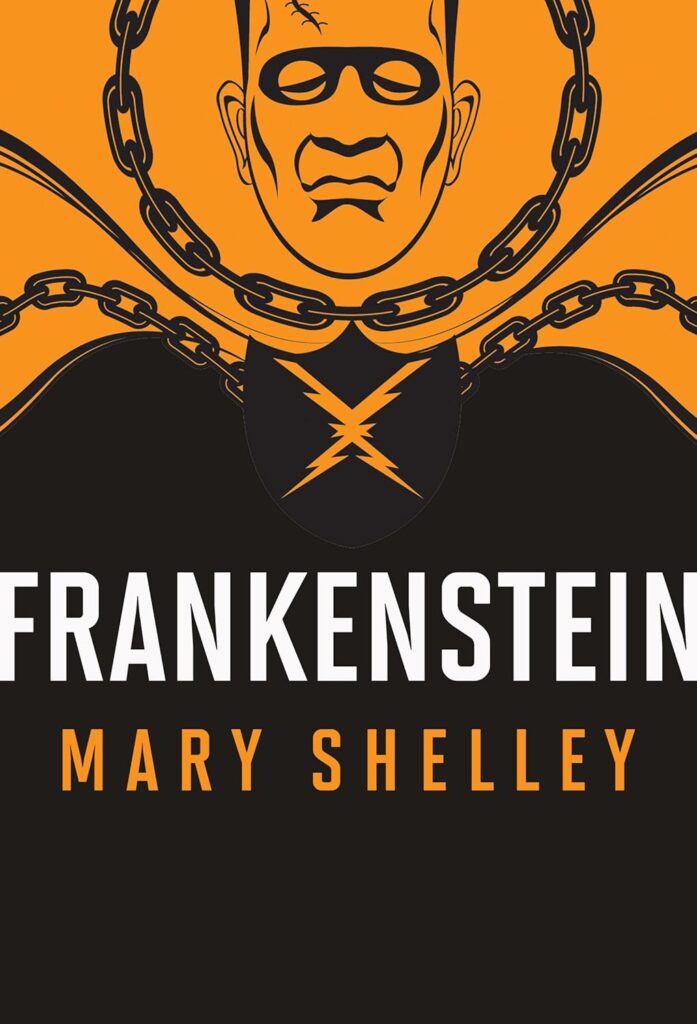
Frankenstein by Mary Shelley, 1818
Daughter of the founding feminist philosopher Mary Wollstonecraft, Shelley’s pedigree comes through in a narrative with a distinct lack of many female characters. However, that’s exactly the point. Frankenstein’s horrifically violent creature symbolizes male appropriation of women’s biology, calls attention to paternal rejection rather than mothering, and serves as a critique of science that cast out more female-empowered ways of healing in the early 17th century.
Buy the book now: Bookshop.org | Amazon
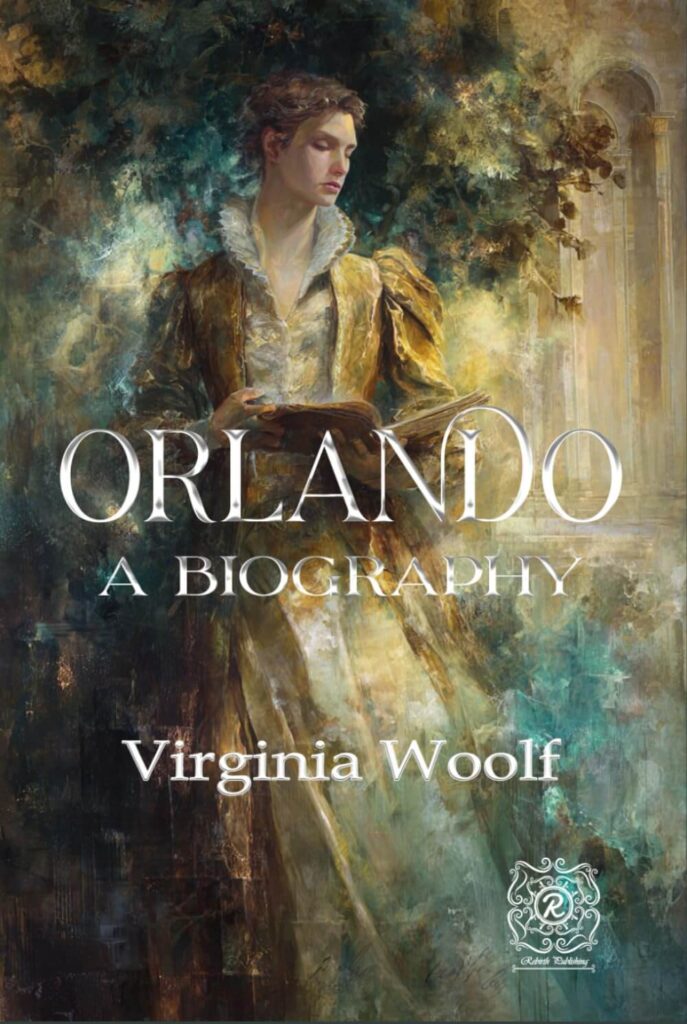
Orlando by Virginia Woolf, 1928
Woolf’s protagonist lives for 300 years, morphing from a man into a woman with the resulting patriarchal constraints including [their] loss of property. Woolf highlights just how much gender is a construction as Orlando’s personality remains the same beneath time’s shifting façades of dress and mannerisms. To enjoy the lavish sweep of time and settings, catch Tilda Swinton in one of her early roles in the movie of the same title.
Buy the book now: Bookshop.org | Amazon
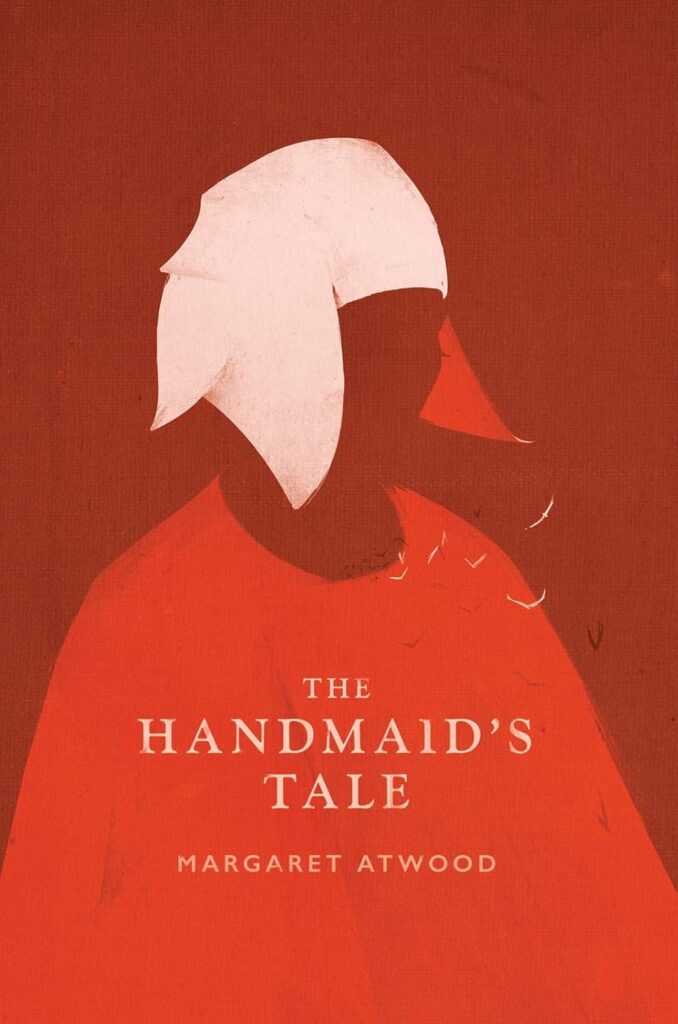
The Handmaid’s Tale by Margaret Atwood, 1985
No list would be complete without Atwood’s dystopian book set in the Republic of Gilead, her imagined totalitarian regime that curbs and subverts women’s rights. Sadly, Atwood has publicly said that the novel may no longer be considered speculative fiction, noting that the US’s rollbacks on reproductive rights and its authoritarian administration has made the premise of her book “increasingly plausible.” Hulu’s television series holds true to the book’s monochromatic setting and powerful characters.
Buy the book now: Bookshop.org | Amazon
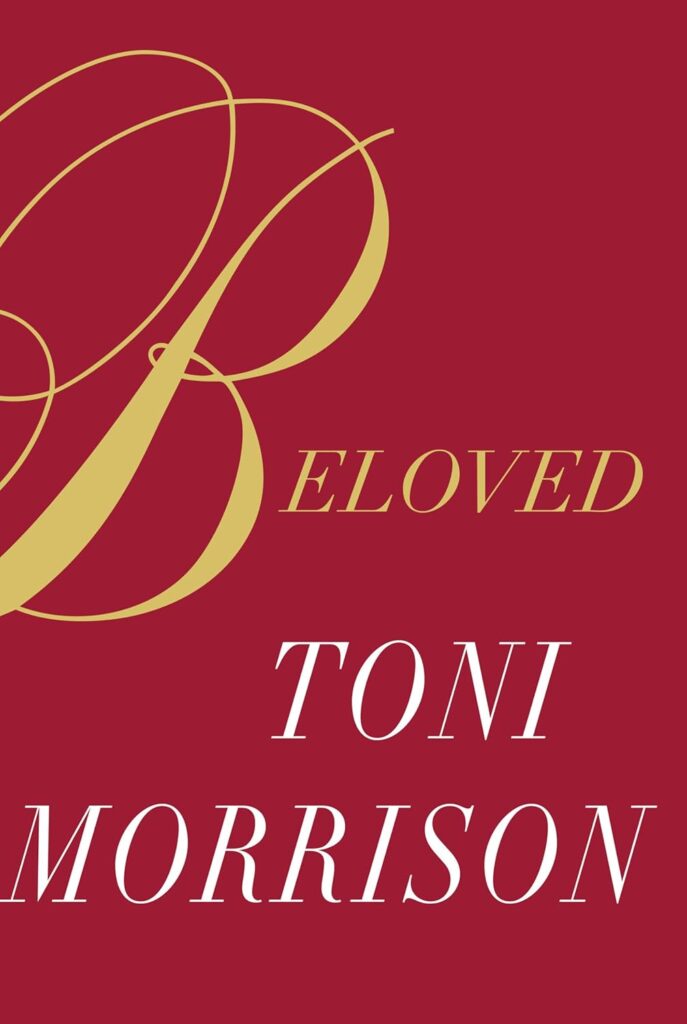
Beloved by Toni Morrison, 1987
Toni Morrison’s novel, centered on Sethe, an escaped slave who kills her child rather than return her to slavery, won 1988’s American Book Award and the Pulitzer Prize in Fiction. Set after the Civil War, the ghost-child Beloved’s speculative haunting symbolizes inherited trauma as a result of enslavement, sexual violence, and the denial of Black female autonomy over their own and their children’s bodies. Through a feminist lens, we can see Sethe’s action as a revolt against the white patriarchy seeking to objectify and claim the Black female body for its own uses.
Buy the book now: Bookshop.org | Amazon
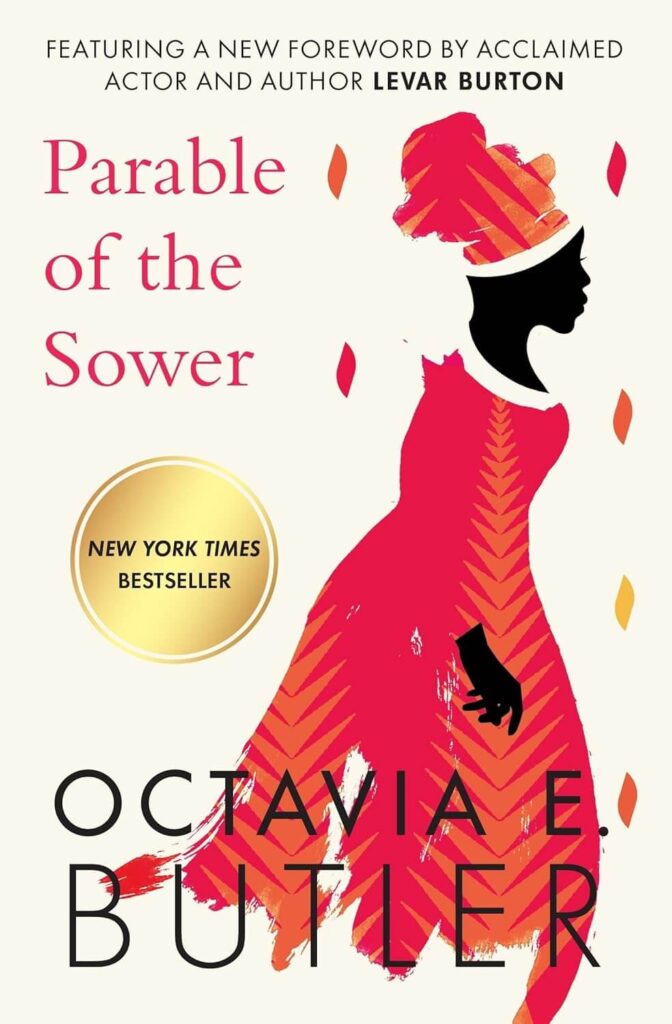
The Parable of the Sower by Octavia Butler, 1993
Speculative feminist fiction cannot be mentioned without the inclusion of Octavia Butler, a true visionary in crafting time traveling and timely stories to remind us of our humanity amidst the acts of the inhumane. Published in 1993, the novel is set in 2024-2027 and has some startling coherences with the years we are living in (Parable of the Talents, the second in a planned trilogy, even features a president who urges voters to “make America great again”). Global climate change, economic crises, and political divides have led to chaos and hyperempathic 15-year-old Lauren becomes the shero that we need to survive as she resists violence as well as establishes a new faith. This book’s urgent message enters the school of ecowomanist thinking, a branch of theology that highlights Black women and women of color and their relationship with the earth. A must read for our times.
Buy the book now: Bookshop.org | Amazon
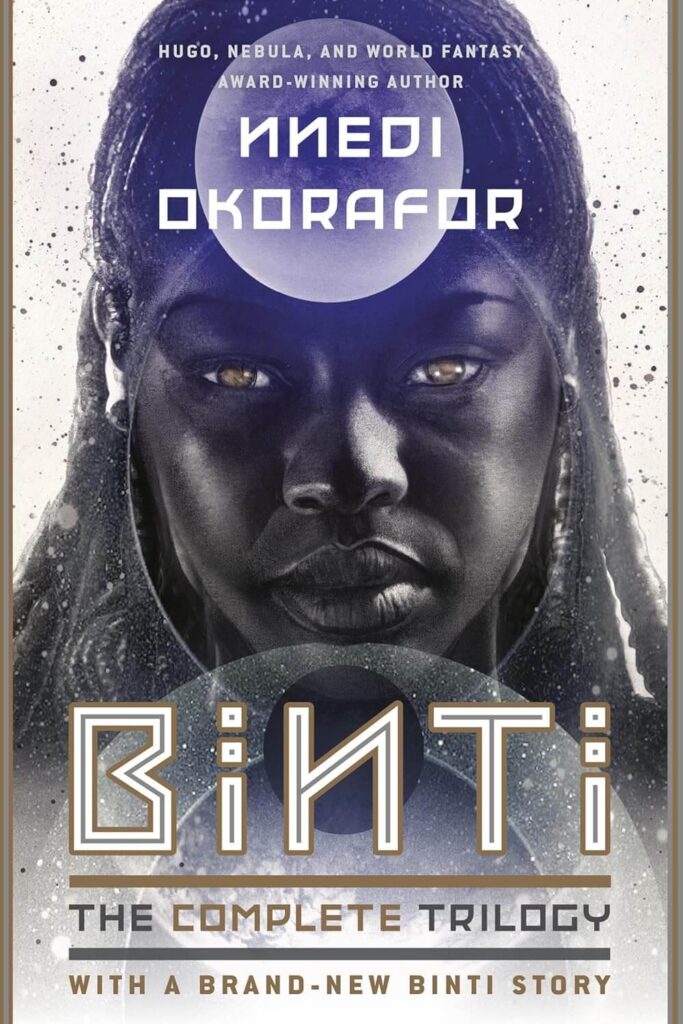
Binti (three novella series), Nnedi Okorafor, 2015-1018
Ursula K. Le Guin said of Okorafor: ”There’s more vivid imagination in a page of Nnedi Okorafor’s work than in whole volumes of ordinary fantasy epics,” and I heartily agree. In an uncharted future, Binti is a 16-year-old Himba student from Earth on her way to a prestigious college when her spaceship is attacked. Left as the sole survivor, Binti becomes a new kind of hero; rather than violence, she draws on her mathematical knowledge, her diplomacy skills, and her intersectional identity to combat patriarchal traditions. Okorafor’s subgenre is Africanfuturism, rooted in African culture rather than the Western ideas about the future. A compelling example is that Binti’s plaits hold an embedded code that enumerates her family’s history.
Buy the book now: Bookshop.org | Amazon
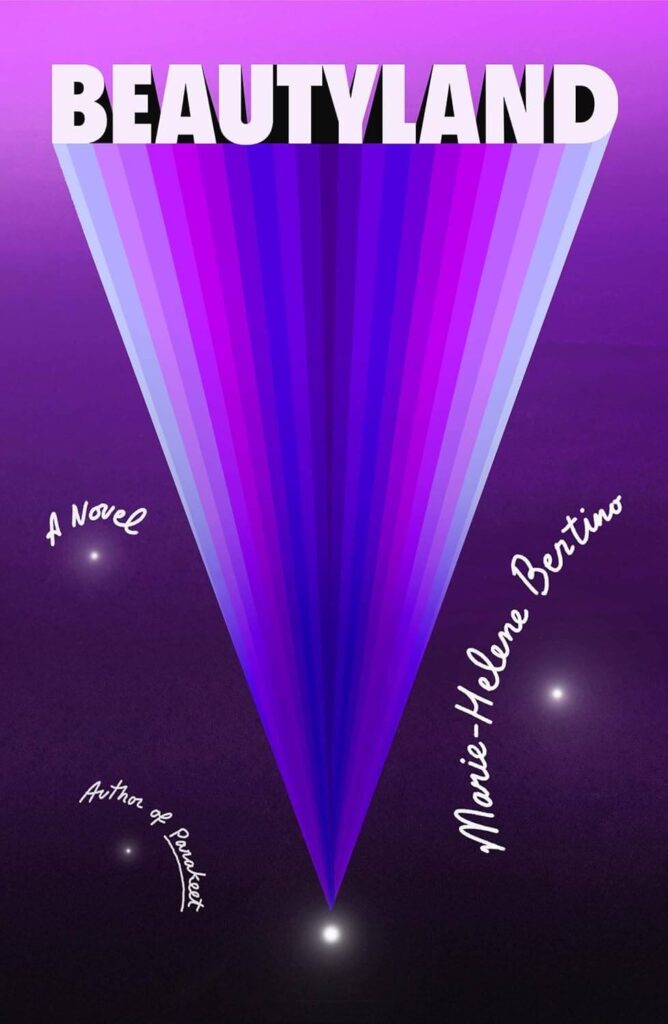
Beautyland, Marie-Helene Bertino 2024
Winner of the 2025 American Book Award yet not your typical coming-of-age novel, Beautyland’s central character Adina Giorno is an extraterrestrial who learns her mission is to report on the absurdities on Earth. Born to a single mom in Philadelphia unaware of her daughter’s communication via fax machine with her home planet, Adina’s detached perspective reveals the alienation felt by women ensconced in the patriarchy and demonstrates both her and her mother’s resilience in spite of that fact. One missive from Adina reads: The ego of the human male is by far the most dangerous aspect of human society. The response from her ET relations: THIS HAS BEEN WELL DOCUMENTED.
Buy the book now: Bookshop.org | Amazon
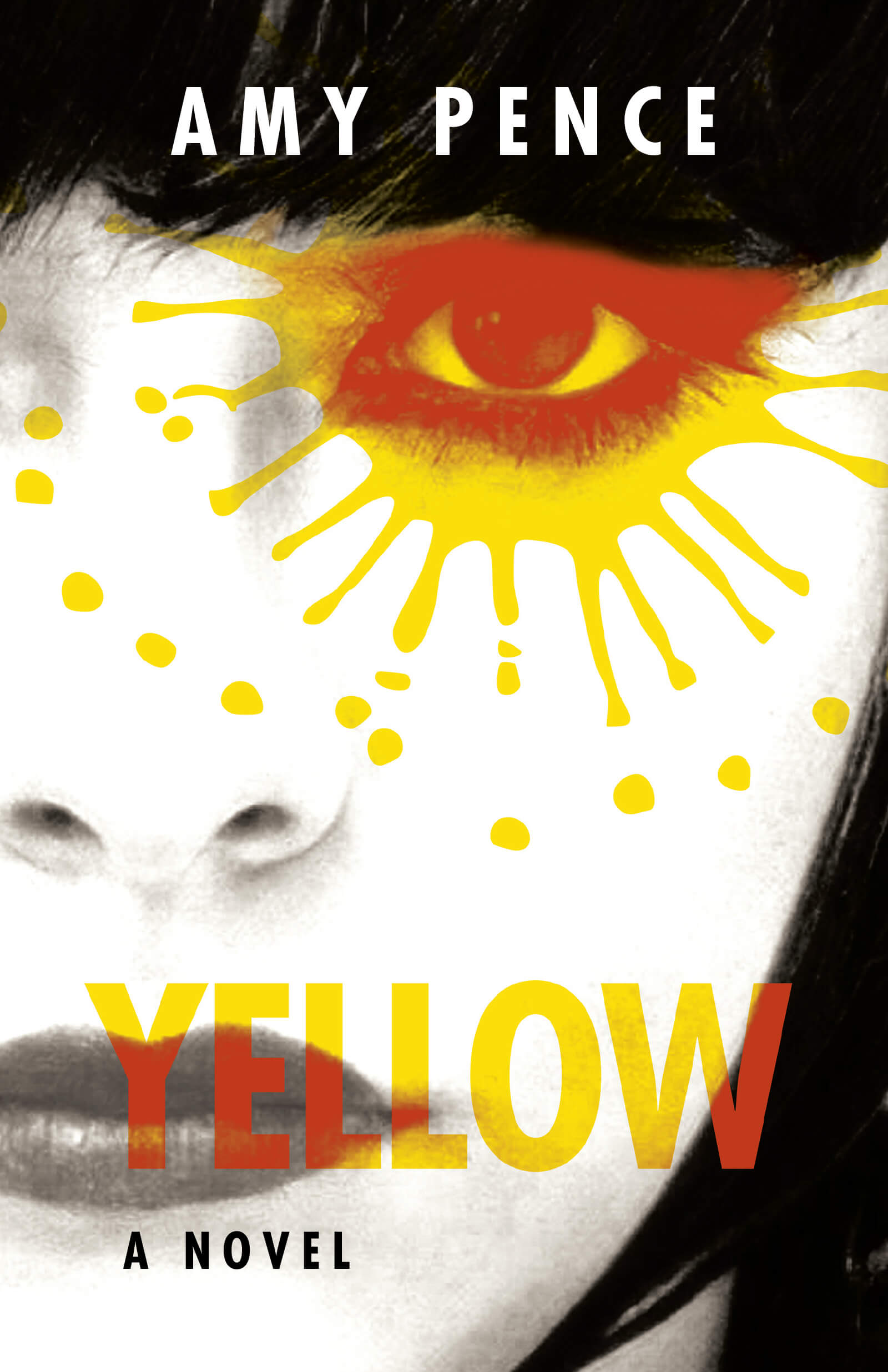
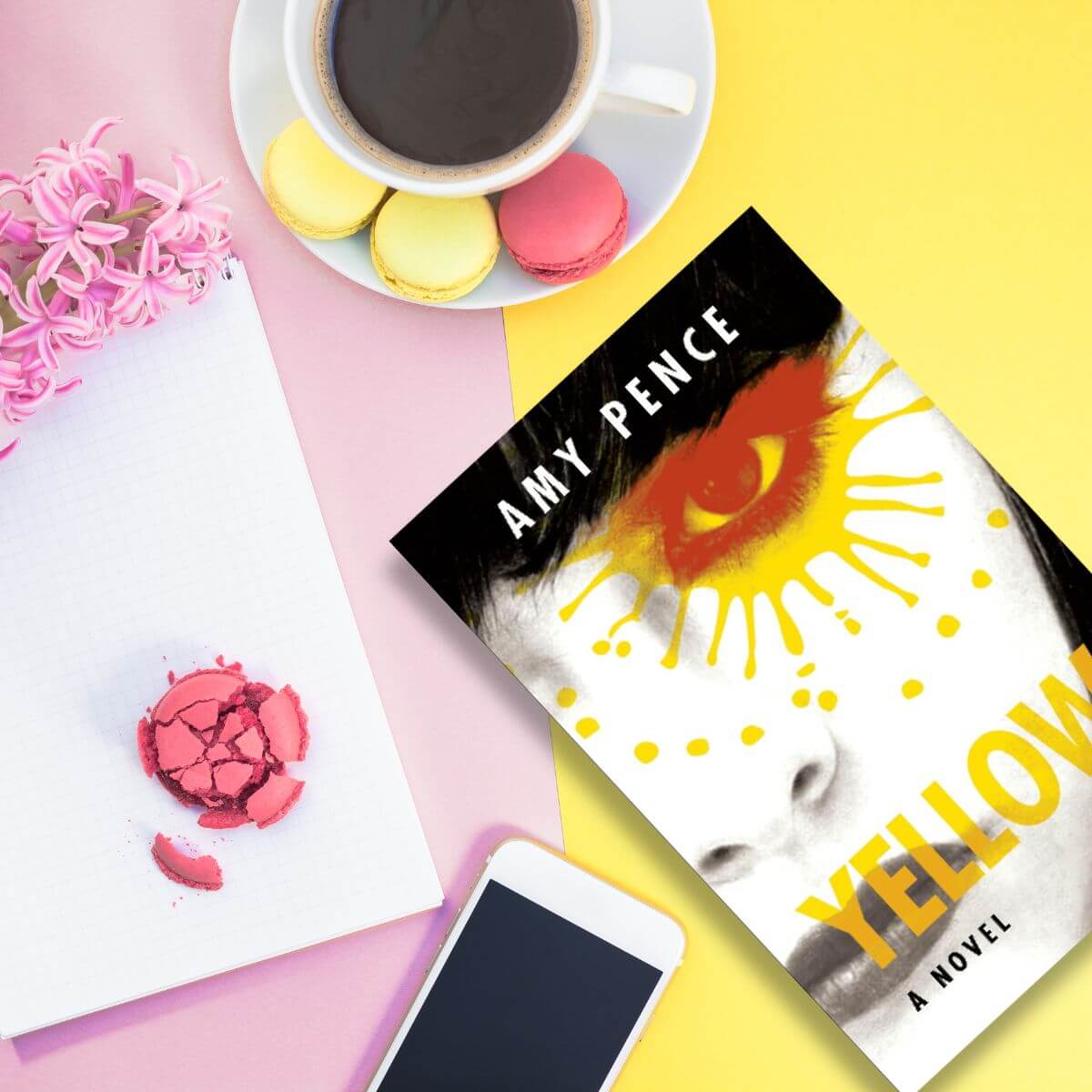
Yellow by Amy Pence
In 1973, with the Watergate hearings and Skylab’s maiden space voyage, it is a time of skepticism and broadened horizons. Z is a girl of 12 years who encounters a mysterious slime mold cultivating in her backyard that inexplicably bonds with the youngling. The tentatively formed kinship breaks when an accidental encounter with a serial killer erodes the extraordinary relationship. Z attempts to regain forgotten knowledge after breaking from the strange entity while brother Clem follows his own path led by the influences of Yellow. Amy Pence crafts an intensely cerebral feminist novel that challenges existing thought in an wholly immersive story.
Buy the book now: Bookshop.org | Amazon
Award-winning poet and hybrid writer Amy Pence is the author of three poetry collections and two chapbooks, including We Travel Towards It, attentive to climate change’s losses, both collective and personal—and the award-winning prose/poetry hybrid [It] Incandescent. Her writing also extends to interviews, essays, and short fiction. Raised in New Orleans and Las Vegas, Amy taught college English and poetry writing at Emory, and in other workshop settings. With works in over 100 literary journals, Pence makes her home in Atlanta, where she continues to write across genres. Yellow marks her powerful entry into long-form fiction. Learn more at amypence.com.


Leave A Comment