

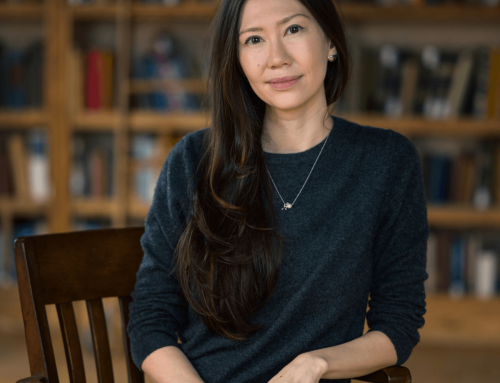
Alane Adams is an award-winning children’s author, vibrant literacy advocate, and creator of Alane Adams Studios, an inventive expansion of her reading mission that broaden’s children’s ability to connect with stories. Known internationally for creating imaginative worlds that inspire young readers, she’s also the founder of the Rise Up Foundation, supporting teachers, classrooms, and literacy initiatives. Now, she’s relaunching The Blue Witch—a beloved story in The Witches of Orkney series—with a readalong that allows children to immerse themselves in 38 fully animated YouTube episodes, professional narration, synchronized text, a weekly companion podcast and over 400 pages of classroom resources for grades 3 – 7. This new endeavor allows teachers and parents to meet children where they are at with an unforgettable story bound to ignite a love of reading.
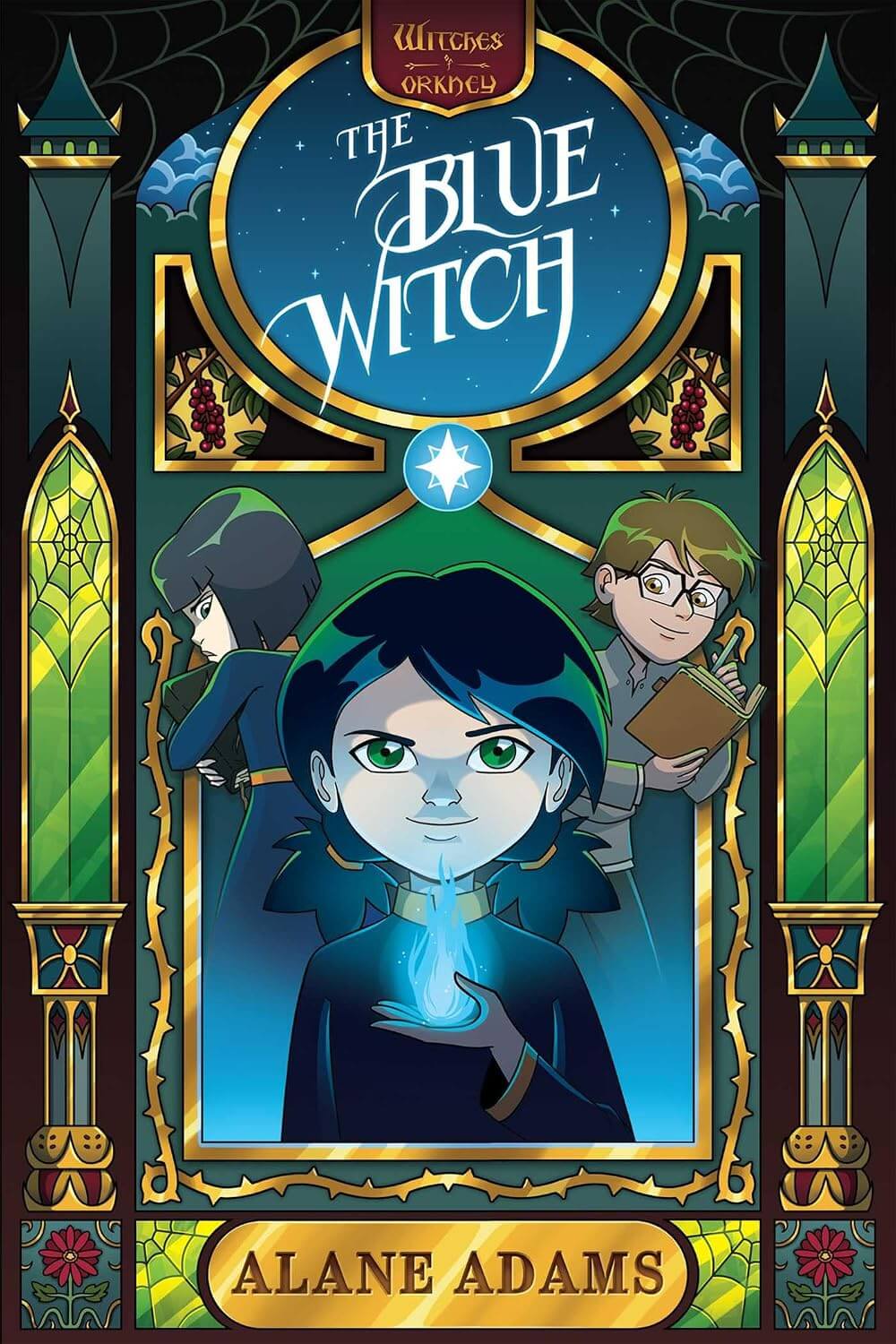
Tell us about The Blue Witch. What is this story about?
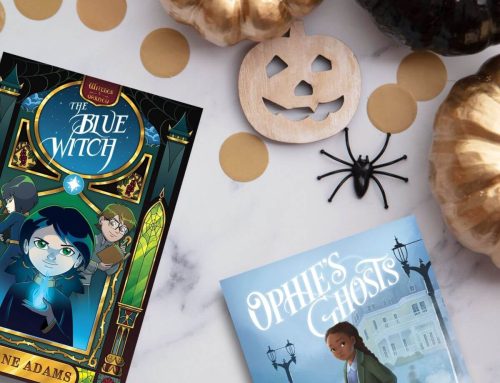
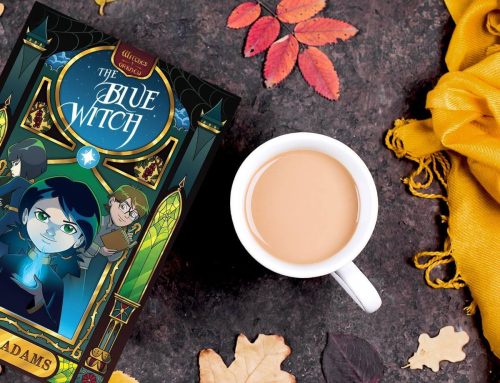
The Blue Witch is a story about a young girl trying to figure out who she is and where she belongs. Abigail is a motherless witchling with a fairly significant problem: she doesn’t seem to have any magic of her own. She’s an outsider in a place where magic defines almost everything.
As the story unfolds, Abigail begins to discover that there is much more to her past—and to her abilities—than she ever imagined. There’s adventure and magic and mystery, but underneath all of that, it’s about friendship, courage, identity, and finding your place in the world. Those are things I think children understand very deeply, whether or not their school happens to teach potions and spells.
Buy the book now: Bookshop.org | Amazon
Now you’re releasing a fully animated readalong for The Blue Witch, complete with professional narration, synchronized text, and companion curriculum. What were you aiming to create with the readalong and who is it best suited for?
The idea was: what if we could make reading feel like a magical adventure?
We took the entire novel and turned it into a fully animated readalong, but the words never disappear. The text is right there on screen and highlighted in synchronization with the professional narration, so children are watching, listening and following the written language at the same time.
I didn’t want to make a cartoon that happened to be based on a book. I wanted to preserve the experience of reading the book while using animation, performance and music to help children enter the story.
We designed it primarily for grades 3–7, but I think there are several ways into it. A confident reader can read along. A reluctant reader may come for the animation and discover that following the words isn’t intimidating. An English-language learner can hear pronunciation while seeing the corresponding language. A teacher can use it with an entire classroom where students may be reading at very different levels.
The companion curriculum was important for the same reason. Teachers can go from the episode directly into comprehension, vocabulary, writing, fluency, character analysis and creative activities without having to build an entire lesson around it themselves.
How do you feel combining YouTube, animation and books helps kids develop a lifelong love of reading?
I think we have to meet children where they are without giving up on where we hope they’ll go.
Kids are surrounded by screens, video and incredibly sophisticated entertainment. A book is competing for their attention in that environment. I don’t think the answer is to pretend those things don’t exist. I’m interested in asking whether we can use some of the things children already love—animation, YouTube, characters, voices, music—to lead them back to words and storytelling.
And I want to be careful here, because I’m certainly not arguing that children need more passive screen time. The goal is almost the opposite. The screen is the invitation. The story is the destination.
There is legitimate concern about reading engagement. Research has documented a long-term decline in reading for pleasure in the U.S., and recent surveys of young people have found historically low levels of reading enjoyment, even though there have been some encouraging signs of improvement in 2026.
If a child comes to The Blue Witch because it looks like something they want to watch, begins following the highlighted words, becomes invested in Abigail and Hugo and Endera, and eventually thinks, “I want to read more stories like this,” then we’ve accomplished something.
How do you envision families and teachers using the readalong?
In the first year of launch, there will be an episode available each week, with the goal of completing the novel before the end of the school year. Ideally a teacher will play an episode each week for the class and then choose from the companion resources depending on what they’re teaching—perhaps inference one week, vocabulary the next, character development or writing after that. We’ve organized the materials by chapter and also created recap sections so teachers can revisit concepts across several episodes. Another decision we made was to keep the resources as downloadable worksheets to encourage written responses, as research has shown that deepens the learning experience.
At home, it can be much simpler. A family might watch an episode together, a child might follow along independently, or a parent might use it with a child who hasn’t yet found a book that makes them excited about reading.
I also think it has great potential for English-language learners because students can simultaneously hear fluent narration, see what is happening visually, and follow the written text. That combination provides multiple ways to understand the same story.
Most importantly, I don’t want the curriculum to turn the story into homework. Story comes first. If children are desperate to know what happens next, we’ve already won the most important battle.
Can you tell us about Alane Adams Studios and your overarching goal to reach kids in an entertaining and educational way?
Alane Adams Studios grew out of a fairly simple question: how do we take the stories and characters we’ve created and meet children in more of the places where they already spend their time?
Books remain at the center of what I do, but the Studio gives us permission to think beyond the physical book. That can mean animation, readalongs, original programming, educational resources and other ways for children to enter a story world.
I’m particularly interested in the space where entertainment and education stop feeling like two separate things. Children shouldn’t necessarily be able to tell when we’ve crossed that line. They should be enjoying a character or wondering what happens next—and meanwhile they’re encountering vocabulary, reading language, thinking critically or becoming curious about something they didn’t know before.
The ambition isn’t to replace books with animation. It’s to create more doors into reading.
How has the addition of the studio project evolved your philosophy around storytelling?
It has made me think much more broadly about what a story can be.
As an author, you’re accustomed to controlling the experience through words. Animation forces you to think about voice, expression, movement, music, pacing and visual storytelling.
Suddenly a character you’ve lived with privately for years has a voice actor and an animator and a whole team making decisions about how that character moves through the world.
That’s both terrifying and wonderful.
It has also made me think much more about accessibility. Not every child enters a story through the same door. One child responds immediately to text. Another responds to an image. Another needs to hear language before they’re comfortable reading it. Another needs a character to make them laugh before they’ll give the story a chance.
The Studio has made my definition of storytelling larger without changing what I think its purpose is: make someone care enough that they want to know what happens next.
You’ve become just as well known for your literacy advocacy as your books. What first inspired that mission?
A lot of it came from traveling with UNICEF and visiting schools around the world.
You can walk into a remote village where access to education is extraordinarily limited and suddenly understand education very differently. A teacher can be this incredibly powerful presence—a person capable of delivering literacy almost like it’s a magical thing.
When books, schools and educational resources are readily available, it’s easy to forget what an extraordinary privilege literacy is. When you meet children for whom those opportunities aren’t guaranteed, you don’t forget it.
Those experiences changed how I thought about my own work. Writing books was no longer completely separate from questions about who gets access to stories, who learns to read them, and who has a teacher with the resources to unlock that world for them.
That remains very real globally. UNICEF estimates that roughly two-thirds of 10-year-olds in low- and middle-income countries cannot read and understand a simple text, and it continues to emphasize the central role teachers play in improving learning outcomes.
I’ve never stopped believing in the extraordinary power of a great teacher.
What are some of the biggest challenges teachers and parents tell you they’re facing when it comes to getting kids excited about reading?
Attention is probably the obvious one. Books are competing with games, short-form video, social media, streaming and a nearly endless supply of entertainment designed to capture attention immediately.
But I think there’s another problem underneath that: reading has to become pleasurable before children voluntarily choose it.
If every interaction a child has with a book is about their reading level, answering questions, taking a test or proving comprehension, it’s easy for reading to become something they associate with performance rather than pleasure.
And this isn’t just anecdotal concern. A 2025 U.S. study using two decades of American Time Use Survey data found a substantial long-term decline in daily reading for pleasure. Common Sense Media has also reported that the percentage of 5- to 8-year-olds who read or are read to daily fell from 64% in 2017 to 52% in 2024.
That’s part of why I’m comfortable acknowledging the contradiction in what we’re doing.
Yes, The Blue Witch Readalong is on a screen. I’m not pretending otherwise. But if ten minutes of screen time introduces a child to a story they love, strengthens the connection between spoken and written language, and makes them curious about the book sitting beside them, I think that’s a worthwhile experiment. Our hope is they will want to read it again and again.
When someone discovers your work today, what’s the first thing you’d love them to explore—the books, the Readalong, the Studio, or your literacy initiatives? How do all those pieces fit together?
I don’t think there has to be a first thing anymore.
A child might discover us through an animated character on YouTube. A teacher might find a classroom resource. A parent might pick up one of my books. Someone else might encounter the literacy work first.
What’s important to me is that those paths eventually connect.
The books are where much of this began. The Studio lets those stories live in new forms. The Readalong brings those two worlds together—it’s animation that continually points children back toward written language. And the literacy work is really the reason underneath all of it.
They’re different expressions of the same belief: stories can change the way children see themselves and the world, but first we have to help children get through the door.
When kids finish The Blue Witch Readalong, where should teachers and parents direct them next in Alane Adams Studios?
Hopefully the first response is, “What’s next?”
We already have more coming. We’re continuing Smudge, with four additional episodes still to come, and we’re developing another readalong around a new story that we’re not quite ready to name yet. There will also be more animated projects coming through the Studio.
What I hope happens over time is that Alane Adams Studios becomes a place children trust for stories. Maybe they arrive because they loved The Blue Witch. Then they discover Smudge. Then another character or another world catches their attention.
And ideally somewhere in that journey, they also pick up a book.
That’s really the circle I’m trying to create: watch something, fall in love with a story, become curious, read something, discover another story. If we can keep that cycle going, then the medium that first brought a child through the door matters much less than the fact that they keep walking through new ones.
Sponsored Post

Leave A Comment