

Adapting a beloved novel for the screen is always a high-stakes gamble, especially when the source material has a fiercely loyal fanbase. More than a decade after The Martian set the gold standard for translating Andy Weir’s work to film, expectations for Project Hail Mary were sky-high. With screenwriter Drew Goddard returning and directing duo Phil Lord and Christopher Miller behind the camera, the pressure to deliver was undeniable.
Somehow, they exceeded it.
With a global opening nearing $141 million and early comparisons to Oppenheimer, Project Hail Mary is a film that people are going to be talking about for years to come. With the help of Ryan Gosling’s effortlessly charming, comedic performance and the unexpected heart of the alien sidekick, Rocky, the film combines science, genuine humor, and emotional depth to create a story that’s just as much about connection as it is survival. The result is a story that feels as vast as space itself and yet lands squarely in your chest.
The Premise
Project Hail Mary follows Ryland Grace, a middle school science teacher who wakes up alone on a spaceship with no memory of who he is or how he got there. As his memories slowly return, he realizes he’s on a desperate, last-chance mission to save Earth from a mysterious substance that’s draining the sun’s energy and threatening all life on the planet.
As Grace pieces together what happened, the story moves between his time in space and the events back on Earth that led to him being chosen for the mission. Along the way, he makes an unexpected ally in Rocky, an alien from another star system who is facing the same crisis on his own planet.
Together, the two form an unlikely friendship and work to solve the problem that could wipe out both of their worlds. What starts as a survival story quickly becomes what it means to show up when everything is on the line.
Creating a Movie Based on a Difficult Topic
Space is a tricky topic to write about in a way that feels both accurate and easy to follow, but Andy Weir has built his career on doing just that. He’s carved out a space for himself in sci-fi by bringing in readers who don’t usually reach for the genre. When She Reads sat down with him, he said,
“My writing is highly technical. I’m still baffled at how it has ended up gathering such broad appeal. When I wrote The Martian I thought I was targeting a tiny potential audience of hardcore nerds. A teensy niche that I was a part of.”
And honestly, that tracks. Weir is known for taking big, complicated ideas—like surviving alone in space or saving humanity from a dying sun—and making them feel engaging and understandable, all while grounding them in real science backed by hours of intensive research.
In a recent interview with The New York Times, Weir also said,
“I go for very scientifically accurate books. I mean, there’s always some MacGuffin in there somewhere. But once you get past that, I try to stay true to real science, mainly because that makes it easy for me when weird questions come up in the middle of the book. I don’t need to make up new physics to support my previously made-up physics. I can just use the real physics to figure out what would happen. In terms of expositioning complex scientific stuff, I just need the reader to understand enough of the science to understand why it’s a problem for the character and why their solution is a solution.”
Project Hail Mary carries that same energy onto the screen, making complex ideas feel much easier to grasp. Between explanations that are simplified compared to those in the book, well-timed humor, and some genuinely emotional moments, the film keeps things grounded without stripping the important science. It may not get every technical detail perfect, but it feels real where it matters. So much so that the theater was filled with sniffling noses, sharp gasps, and utter silence when things got tense.
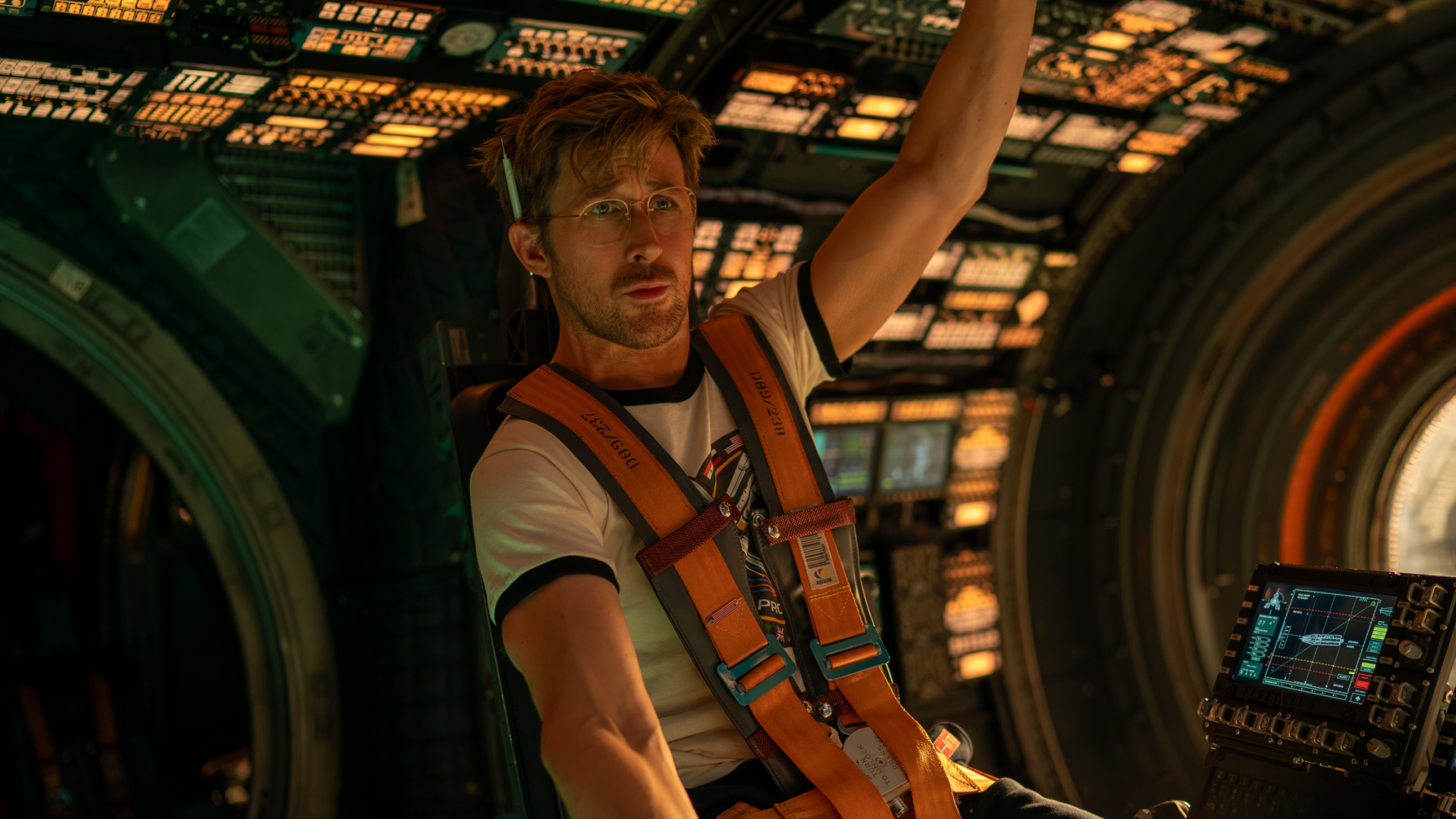
Photo credit: Amazon MGM Studios
The Filming Process
At a time when so much of the conversation around movies is tied up in AI, Project Hail Mary feels like a breath of fresh air. In an interview with The Hollywood Reporter, co-director Christopher Miller shared that the film didn’t rely on green screens. Instead, the spacecraft was fully built out as a practical set, creating a world Gosling could actually move through.
Even Rocky, Ryland Grace’s treasured companion, was brought to life as a 3D-printed animatronic puppet, adding a level of realism that can’t be replaced using other technologies. And in a rare move for a modern blockbuster, the finished digital film was transferred to physical film stock and then re-digitized to give it that textured, analog look.
All of these small but important decisions speak to how intentional the filmmaking was. Thanks to cinematographer Greig Fraser and everyone else who worked on the film, these choices give the movie a sense of authenticity that’s been missing from Hollywood lately.
Our Overall Thoughts
Project Hail Mary is the kind of movie that sticks with you (and will likely make you want to see it more than once). It’s equal parts smart, heartfelt, and fun to watch. It’s a reminder that grand, ambitious sci-fi can still feel personal, and that sometimes the most unexpected connections end up meaning the most. Whether you’re a longtime fan of the book or going in completely blind, this is one that’s absolutely worth the trip to the theater. However, viewer be warned: you’re going to want to bring tissues.






Leave A Comment