
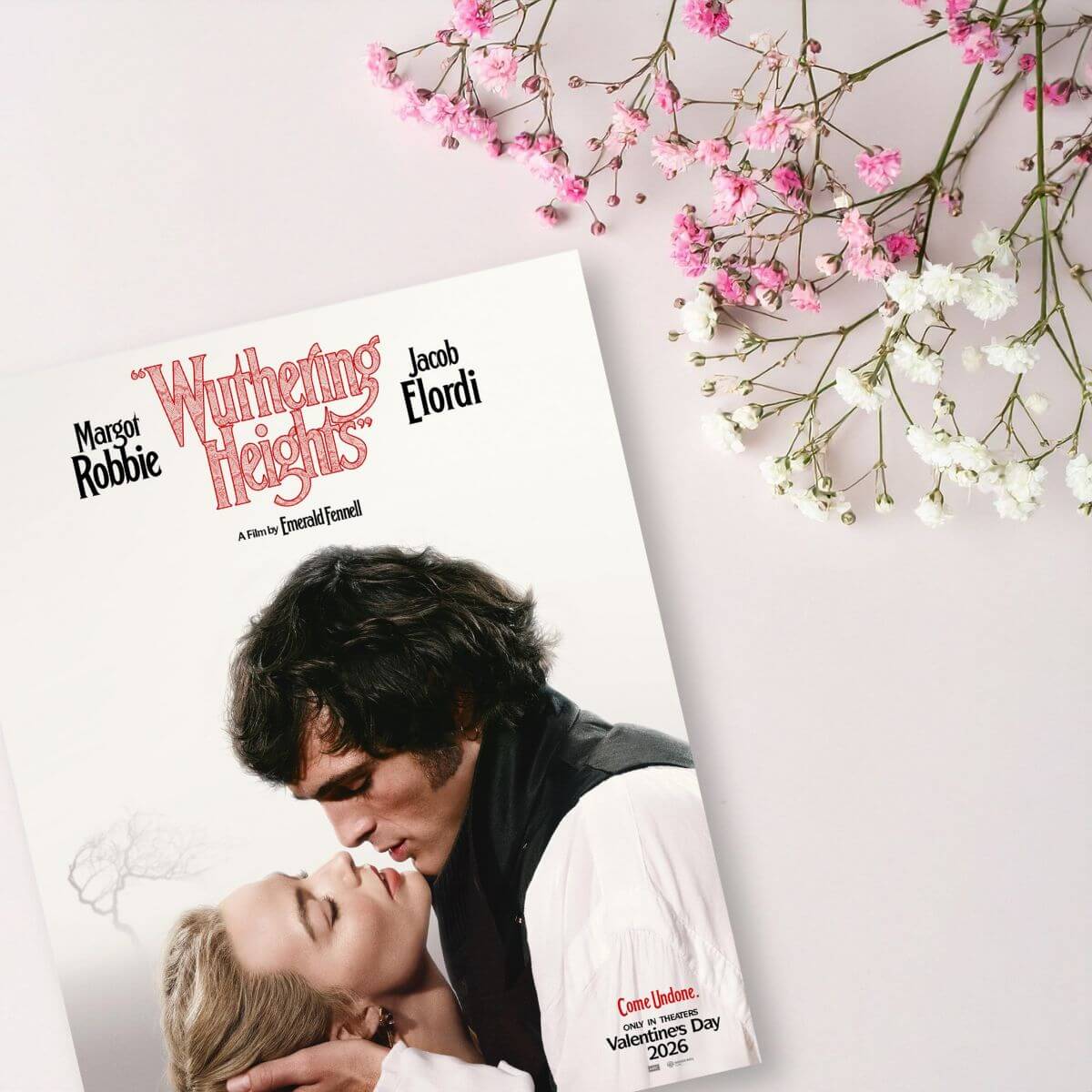
When news broke that Emily Brontë’s Wuthering Heights was headed for a Warner Bros. film adaptation, our excitement was matched by unease. It is, after all, one of the most revered novels of all time, rightfully beloved, dissected, and fiercely protected by readers. And with director Emerald Fennell behind the project—known for her unsettling, messy, and provocative work like Saltburn—the stakes felt especially high. She had monumental shoes to fill. The result is a film that honors the spirit of Brontë’s classic while unabashedly playing right into the hands of thirsty BookTokers. And honestly? We loved every second of it.
The Book vs. The Movie
Brontë’s gothic novel follows an outsider who arrives at Thrushcross Grange in search of a quiet retreat. His isolation is, however, short-lived, after a visit to the nearby Wuthering Heights introduces him to the cold, impenetrable Mr. Heathcliff. Though their encounter is brief, it sparks a deep obsession with uncovering Heathcliff’s past. What unfolds is a generational tale of the Earnshaw and Linton families, pieced together through the recollections of their servant, Nelly Dean. It’s a story steeped in passion, jealousy, rage, and revenge.
While the novel spans decades, the film focuses on the volatile relationship between Catherine Earnshaw and Heathcliff, following their transformation from inseparable childhood friends to bitter enemies who can’t seem to keep their hands off one another. Readers of the book will recognize some of Brontë’s most famous lines—“He’s more myself than I am. Whatever our souls are made of, his and mine are the same,” and “I have not broken your heart—you have broken it; and in breaking it, you have broken mine.” Yet the adaptation also takes creative liberties: the absence of Catherine’s brother Hindley, replaced by a drunken Mr. Earnshaw; a heightened intensity in Catherine and Heathcliff’s bond; and a reimagined trajectory of tragedy that reshapes the fate of both families.
The Result of Choosing Jacob Elordi as Heathcliff
Margot Robbie and Jacob Elordi deliver compelling performances that draw the audience in, even as the adaptation softens the characters’ sharper edges. Elordi’s Heathcliff, in particular, is far more restrained than his literary counterpart. While we catch glimpses of the cruel and vengeful man many love to hate, the film’s character is far more of a brooding romantic that will stop at nothing to be with the woman he loves. The book’s exploration of racism and classism, which shapes Heathcliff’s isolation and fuels much of his rage, is largely glossed over in favor of a more sweeping, obsessive love story. As a result, the film leans heavily into passion and longing, trading Brontë’s social commentary for intimacy and emotional intensity. It’s a choice that will undoubtedly divide readers, but one that perfectly conveys the film’s central goal: to frame Wuthering Heights first and foremost as a tragic romance, rather than a study of power and prejudice.
A Surprise, Tearful Ending
Despite all that, by focusing so fully on Heathcliff and Cathy’s fiery, all-consuming romance, the film makes its heartbreak hit with remarkable force. In the final moments, brief glimpses of their shared past make the loss feel even more profound, leaving the audience deeply invested in their tragedy. When the credits rolled, few in the theater remained dry-eyed—a testament to how the movie turns a story of passion and toxicity into something heartbreakingly intimate.
Ultimately, the film presents like a bodice-ripping romance for the “BookTok generation”—full of humor, desire, and longing—while still capturing the angst and forbidden intensity of Brontë’s original. Its ending hits with surprise emotional force, reimagining the story in a way that tugs at the heart without following the book scene for scene. Going in knowing it’s not a faithful adaptation allows you to appreciate it as a bold, creative take on a classic rather than getting caught up in comparisons.



Leave A Comment