

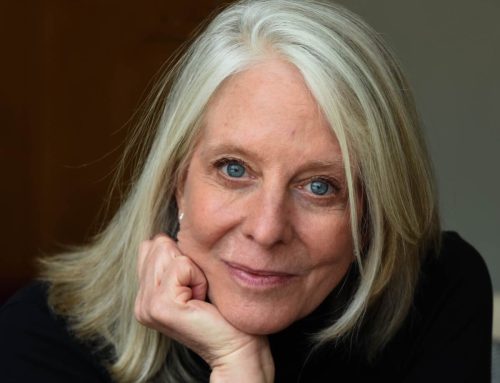
Brooke Fast is a lover of dystopian, fantasy, and all things romance. When she’s not writing new worlds, you can find her curled up on the couch with her husband and their pups in their self-built tiny house in the mountains of Maine. She’ll either be consuming copious amounts of coffee and thumbing through the latest romantasy release or sharing book reviews and writing snippets under her alter-ego, @librarybrookes. To Cage a Wild Bird is her first novel.
My life’s trajectory changed on a Tuesday night when I was thirteen, huddled beneath a tent of bedsheets with a library book and a flashlight.
It was after 2:00 AM, and I had to be up for school in a handful of hours, but I was helpless to do anything but turn the pages of The Hunger Games. In my childhood home, I was known for defying normal sleeping hours in favor of reading, and I was forbidden from doing just that. That didn’t stop me, of course, but it meant my parents routinely ran midnight patrols to make sure I wasn’t sleep-deprived come morning. Usually, I was prepared for their check-ins: the crack between my bed and the wall was the perfect spot to wedge a book, and if I kept an ear turned toward the door, I’d hear my father’s creaking footsteps from a mile away. But that night, as engrossed as I was in the world of Panem, my doorknob rattled before I knew anyone was there.
I switched off my flashlight, shoved the book beneath my pillow, and tried to breathe in a rhythm that would convince my father I was fast asleep. He didn’t bother to turn on my bedroom light, but his parental instincts seemed to home in on my hidden book like a bloodhound on a trail as he crossed the room and plunged his hand directly beneath my pillow. I saw the potential consequences flash through my mind—room inspections before bed or the temporary confiscation of my book collection. The horror. Miraculously, my father’s fingers swept entirely around the edges of the book, never once making contact.
“Good,” he whispered, satisfied, as he pulled his hand back. And then he strode from the room. When the door clicked shut behind him, I took a ragged breath, switched my flashlight back on, and kept reading.
I had to know if Katniss Everdeen survived.
Fast forward several years, and I found myself in another moment when my heart raced, and I struggled to draw a full breath, though this time tears of joy streamed down my shocked face. I was sitting on my sofa, drafting my next book, when my editor and publicist called to tell me that my debut dystopian romance novel, To Cage a Wild Bird, had officially hit the New York Times bestseller list. I sobbed so hard I could barely form the words to share the news with my husband. Reaching that milestone felt like an impossible dream, and I couldn’t help but think back to that fateful night when I devoured The Hunger Games for the first time and decided I wanted, needed, to write stories of my own.
I think every writer can name a piece of fiction, whether a book or just a single line or scene, that changed everything for them. For me, it was the moment Katniss stepped forward at the Reaping and volunteered as tribute to save her sister, Prim, from the arena.
In To Cage a Wild Bird, everything the protagonist, Raven, does is for her brother, Jed. So, when he’s arrested and sent to Endlock—a prison where the wealthy pay thousands to hunt inmates for entertainment—Raven doesn’t hesitate to throw herself into the line of fire. Even though no one has ever survived Endlock, Raven deliberately gets herself arrested, hoping to break Jed out from the inside. Like Katniss, Raven’s motivation and strength aren’t born from a desire to be a hero, but from an intrinsic need to protect the people she loves.
While Katniss is thrown into an arena with Peeta, a boy from her home, District 12, I wanted to explore a forbidden romance between people on opposing sides. After Raven is sent to Endlock, she’s forced to align with Vale, a mysterious prison guard she hates, to survive. As she gets to know Vale and he helps her inch closer to escape, Raven learns that despite their backgrounds and positions at Endlock, his motivations may not be so different from her own.
But to bring a dystopian romance to life, I had to face a publishing market vastly different from the one that existed when The Hunger Games was published. When I first began querying literary agents, I was told more than once that, while agents loved the story, dystopia was “a dead genre” or that “a dystopian book doesn’t have a place in the current market.”
It was discouraging, to say the least, but it didn’t stop me. I believed in my story too much to let it go. I knew readers still craved books that held up a mirror to reality, made them question the world around them, and offered hope amid dark circumstances.
I’m so grateful I didn’t give up. Shortly after, my amazing agent picked up To Cage a Wild Bird, and we went out on submission, signing with publishers across the globe. As it turned out, dystopia wasn’t dead. It was making a massive comeback.
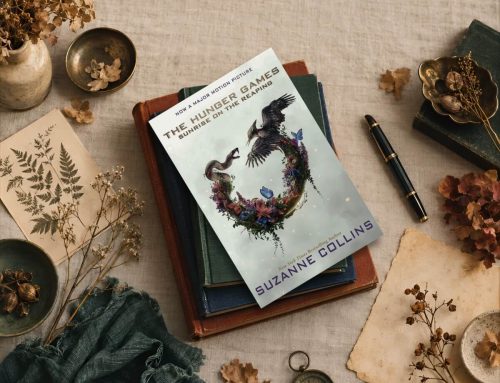
To Cage a Wild Bird was published in March 2026, just a year after Suzanne Collins’s latest installment in The Hunger Games Universe, Sunrise on the Reaping.
This November, when the film adaptation of Sunrise on the Reaping hits the big screen, I’ll be sitting in the theater on opening night, stripped of my flashlight and no longer huddled beneath a tent of bedsheets, but surely carrying the same awe I felt at thirteen.



Leave A Comment