
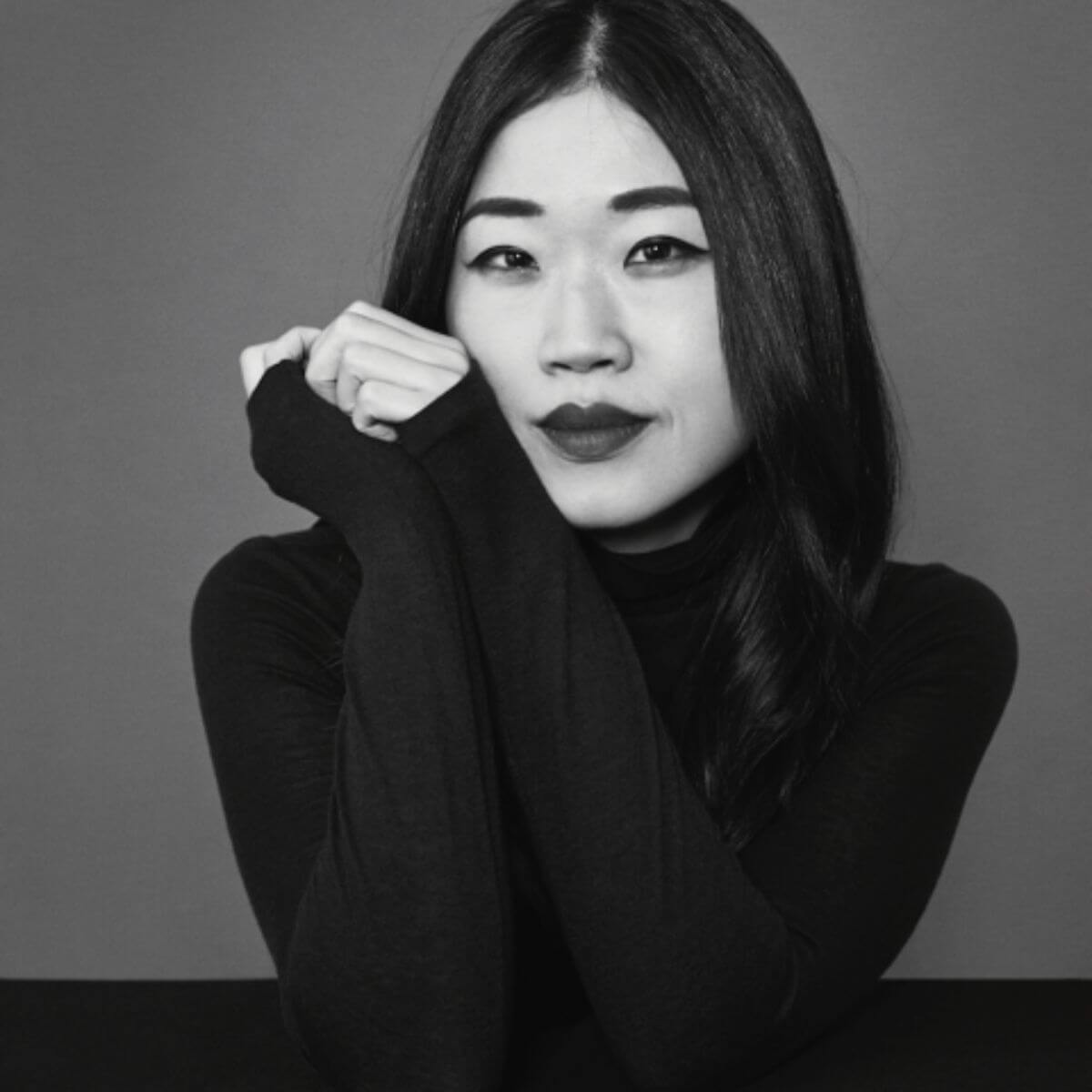
Mary H.K. Choi is splashing into summer with an adult debut you’ll want to curl up in a lounge chair with. This bestselling author is whisking us away to a Hollywood-set story that explores the complex dynamics of mothers and daughters, the rise and fall of fame and first loves. Pool House is an absolutely must on any summer reading TBR, out June 9th. We had the chance to have an exclusive chat with Mary where we talked about her own mother/daughter dynamics that influenced the book, living in LA and her book recs for 2026.
She Reads: Let’s start with Pool House. Can you tell us a bit about the story, what inspired it?
Mary H.K. Choi: Pool House is set in L.A., which is new for me since I’ve lived in New York for over 20 years. I spent about two years in L.A. for a TV job, and that time felt very specific. It was kind of this liminal state. I started a new job, there was a lot of relaunching happening, and it got to a point where there was this Truman Show or Groundhog Day–like repetitiveness to my days that felt very specific to L.A.
Buy the book now: Bookshop.org | Amazon
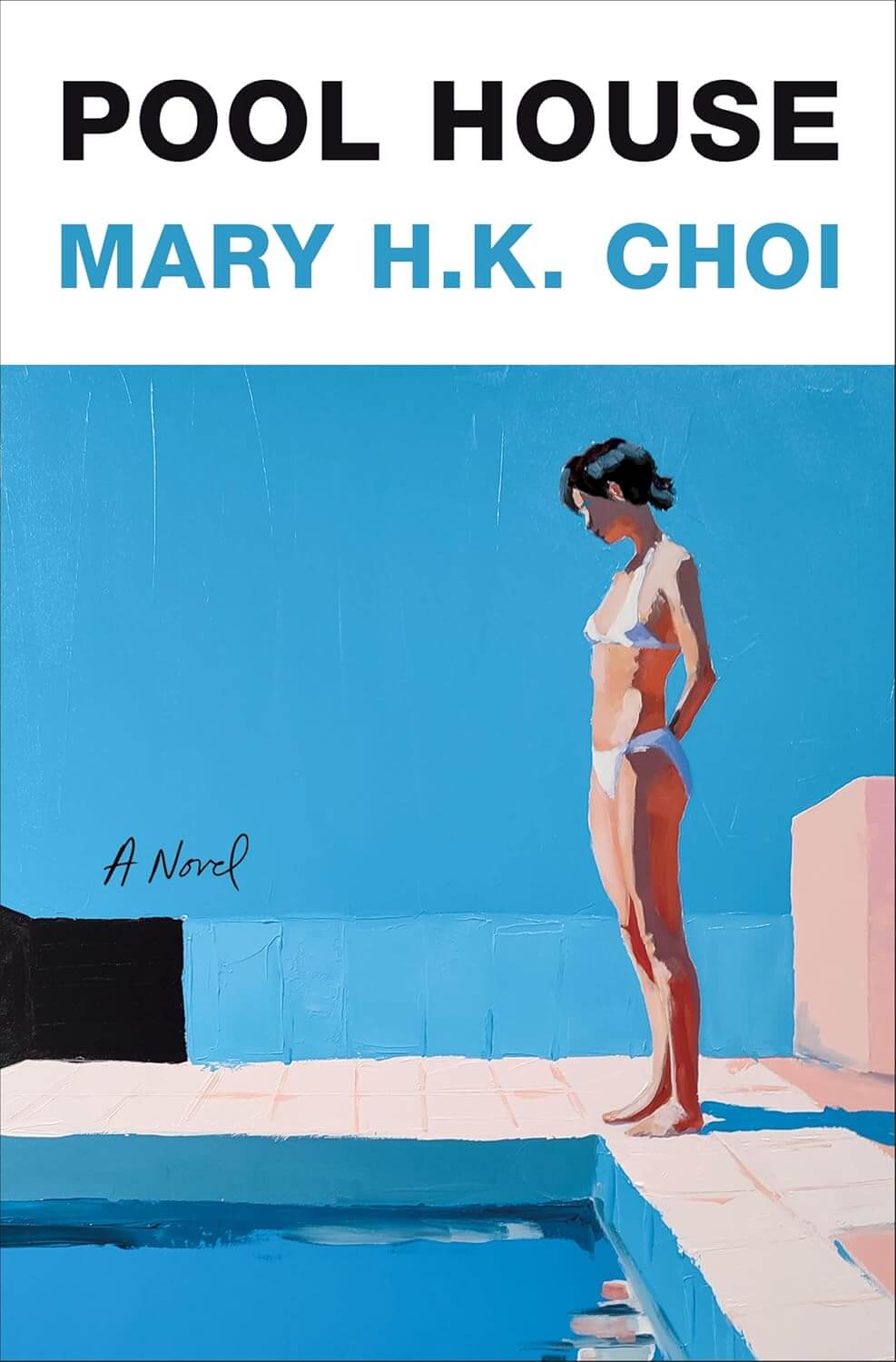
[In Pool House], the mother, [Moon], used to be an actor and was, like, sitcom-successful—syndication money, that kind of thing. So she built this beautiful house, and it became this testament to all her success. She also has a complicated relationship with her own mother—go figure—but now the two of them have kind of been demoted. They’re living in the pool house across the lawn, renting out the main house.
So it’s this monument to her success that’s turned into a monument to her failure, and now they’re on display inside it.
There’s something about two women who aren’t really speaking, living in a glass box. Obviously, it’s a metaphor for Hollywood. It’s a metaphor for the male gaze. But it’s also that idea of—who is faultless? Who gets to throw stones in a glass house?
And to be really reductive, someone said it’s like Schitt’s Creek meets Parasite, and I was like—it’s kind of Schitt’s Creek, but more like Bojack Horseman. There’s house drama, there’s sitcom, there’s the role you’re playing versus the role you’re supposed to be.
And with Stevie, there are all these parallels where she’s constantly seeing her mother through a barrier—through a TV screen of a show she wasn’t on, through the glass house, through all these layers. She’s always watching her mother.
She Reads: What led you to move into adult fiction from YA?
Mary H.K. Choi: I don’t think of writing as hierarchical. I’ve always written whatever the story is, and wherever it lives on a shelf—that’s a marketing thing, not really my problem. I’ve always been in that late teens, early 20s space, that in-between feeling. In this book, we have a 20-year-old, but we also have a character in her late 40s, the mother.
It wasn’t something I set out to do. The story just starts talking. Dialogue pops up, scenes pop up, characters appear. And as I was grappling with my own age and my own feelings about not having kids, I realized this was a story told in multiple POVs.
So it wasn’t that I was pursuing adult fiction—it was that the story couldn’t be contained within YA anymore. It just existed outside of that realm, and I welcomed that.
People ask if it’s “more adult” because there’s more sex, and it’s funny because the term “adult” immediately sounds NC-17. But I’ve always had sex in my books. It’s more about the weight you give things. There are firsts for both characters, but those firsts span entire lifetimes.
There are themes I wouldn’t have explored in the same way for a younger audience—not because they can’t handle it, but because I take that responsibility seriously. There are tough family dynamics, and the reality that a parent’s love can be incredibly nuanced. Those are things that sometimes take years to fully understand.
She Reads: I love how you describe L.A. as a kind of “prison paradise.” It feels like a place where you float a bit.
Mary H.K. Choi: I genuinely love L.A., but there is something about the weather that lends this golden, purgatorial aspect to it. I refer to it as being “afternooned to death.” There aren’t wild vacillations, and as a New York person who has an unhealthy relationship with chaos, I was like, do I feel too safe here? What’s going on?
She Reads: And with Pool House being categorized as adult fiction, it feels like you’re acknowledging that some wisdom can’t be rushed.
Mary H.K. Choi: Totally. Even a whole book isn’t enough to explain certain life lessons. That might be my own caution, but it felt appropriate.
At the same time, the book is really funny. There’s so much humor in life—even in the worst moments. There’s something ridiculous about everything—love, sex, death—and I had a lot of fun with that.
She Reads: Stevie and Moon are both stuck in different ways—financially, emotionally, relationally. What drew you to writing about two women at different stages who are both struggling to move forward?
Mary H.K. Choi: I feel like I’m constantly in a detente with my mother. I’m so driven to write about her. I’m obsessed with my mother.
There’s this resentment—like, why did I have to be here? Why did you bring me into this world? Meanwhile, my father was there the whole time, but all my feelings go toward her.
It’s this codependent enmeshment where everything you do feels like a betrayal of how they would do things. And at the same time, there’s this intense love that’s never enough.
Nothing I do is ever fully beyond critique, and I know it’s because I contain all of her dreams. It’s deeply mythical. It’s immigrant stuff. It’s everything.
When my dad died, it became even more complicated because he had been a stabilizing force. And the book became, in some ways, about learning to metaphorically “kill” my mother so I could forgive myself for my dad’s death.
I loved the idea of setting them in a glass pool house—being constantly on display. The mother used to be successful, and now they live in this monument to that success that feels like failure.
There’s something about two women not speaking, living in a glass box. It’s about visibility, judgment, and who gets to throw stones.
She Reads: Did being in L.A. influence how you incorporated film and celebrity culture?
Mary H.K. Choi: For over 20 years, I’ve worked adjacent to celebrity culture—red carpets, interviews, profiles. I’ve been a fly on the wall, the envoy for the audience, but never the subject.
You see how the mystique disappears when you’re around it long enough. Then you step away, and suddenly the performance comes back on.
There’s this tension between public and private, on and off the record. And from the perspective of the celebrity, there’s no privacy—you’re constantly being handled, observed, consumed.
That duality was really interesting to explore.
She Reads: There’s also this strong thread of fame—current fame versus former fame. What interested you about exploring both?
Mary H.K. Choi: I’m seeing my youth replay itself right now. Fashion cycles, body trends—it’s all coming back.
There’s this same level of scrutiny, this same obsession. Fame used to feel more centralized, more monocultural. Now it’s fractured, but the intensity is still there.
The parasocial relationships are just as strong.
She Reads: Adam plays an interesting role in the story. How does his presence expose the cracks in Stevie and Moon’s relationship?
Mary H.K. Choi: He represents everything Stevie has been longing for. She’s been in love with him since she was a kid.
When he comes back, everything becomes more complicated. She’s pretending her life is something it’s not, and she’s doing it to stay close to him.
He’s both a sibling figure and a romantic one. It’s confusing, embarrassing, and very real.
She Reads: Switching gears a bit for the season—where is your favorite place to read or write in the summer?
Mary H.K. Choi: Anywhere where indoors and outdoors feel the same. I love being poolside—ideally sitting next to a pool, not in it, eating fries and reading a book.
Also, I love anywhere where you’re outside and there’s sun and there’s a lot of trees. If I had my druthers, that would be it for me because I love a tree.
She Reads: What travel destinations inspire you creatively?
Mary H.K. Choi: Places that make you forget the internet exists. I love Switzerland—Lucerne in particular.
I’m beginning to suspect that a small town might suit me for writing. And New York is for admin and meetings. I do really like that balance.
We go to a house in Corsica that belongs to a very long-time friend of my partner’s, and that’s another place where you’re so close to the ocean, and we don’t really know anyone. We just grill and eat and putter around.
Because there’s no AC—hello, Europe in the summer—we do this thing where we just move with the shadow. We’ll sit somewhere in the very early morning, then shift in the afternoon, and then again during that late siesta time when all the windows are closed and we’re inside.
We’re basically just staying ahead of the sun all day, and that becomes the activity.
Writing in those situations is really nice. It feels like a good place to kind of root around in my brain from.
It feels like touch grass for my whole body.
She Reads: What are you currently reading?
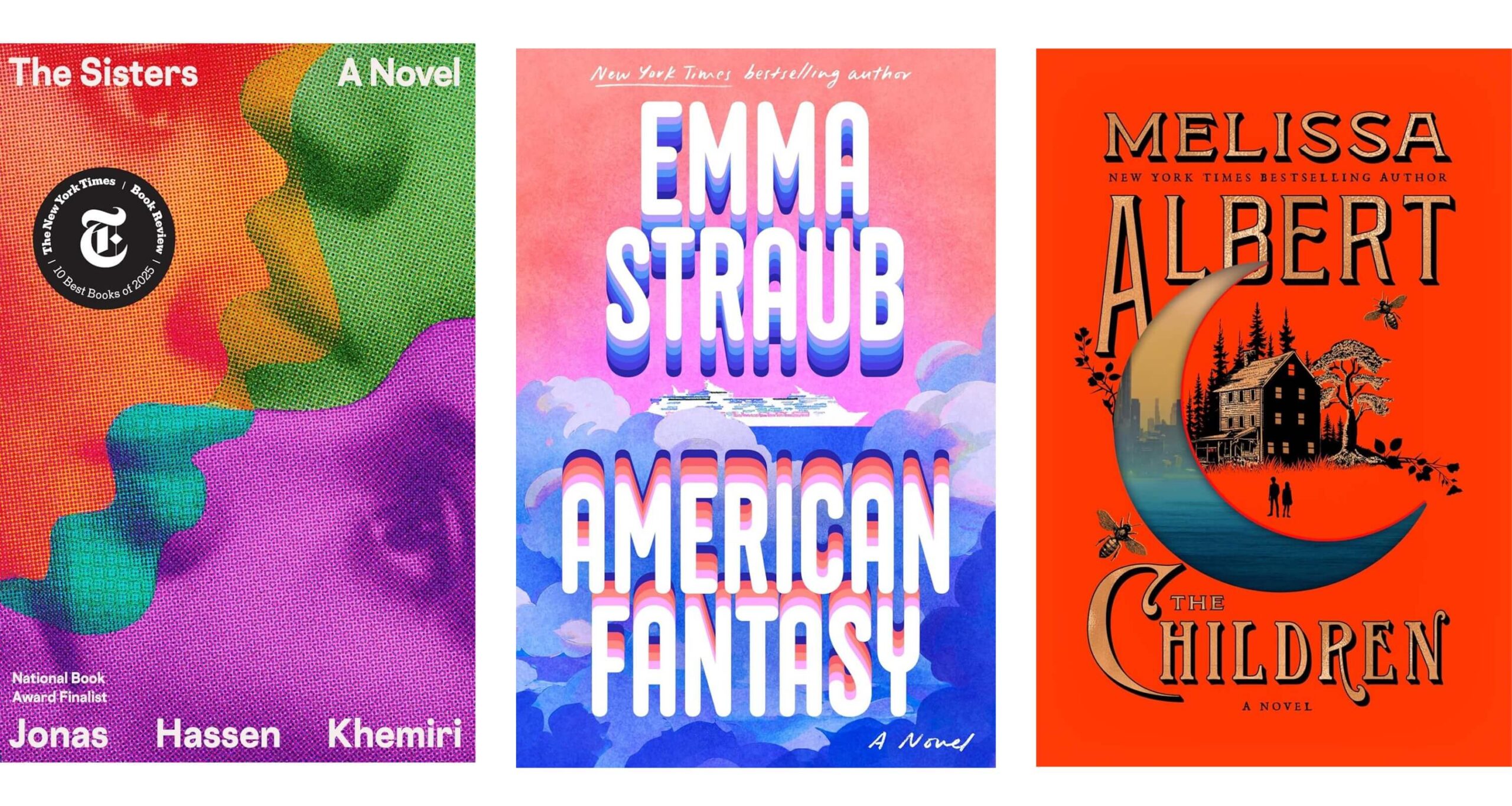
Mary H.K. Choi: I’m reading The Sisters by Jonas Hassen Khemiri, it has this incredible stream-of-consciousness style. I’m also reading American Fantasy by Emma Straub and The Children by Melissa Albert. [Albert]’s like spooky and creepy, but incredibly poetic. I tend to read multiple books at once.
She Reads: What books do you recommend over and over?
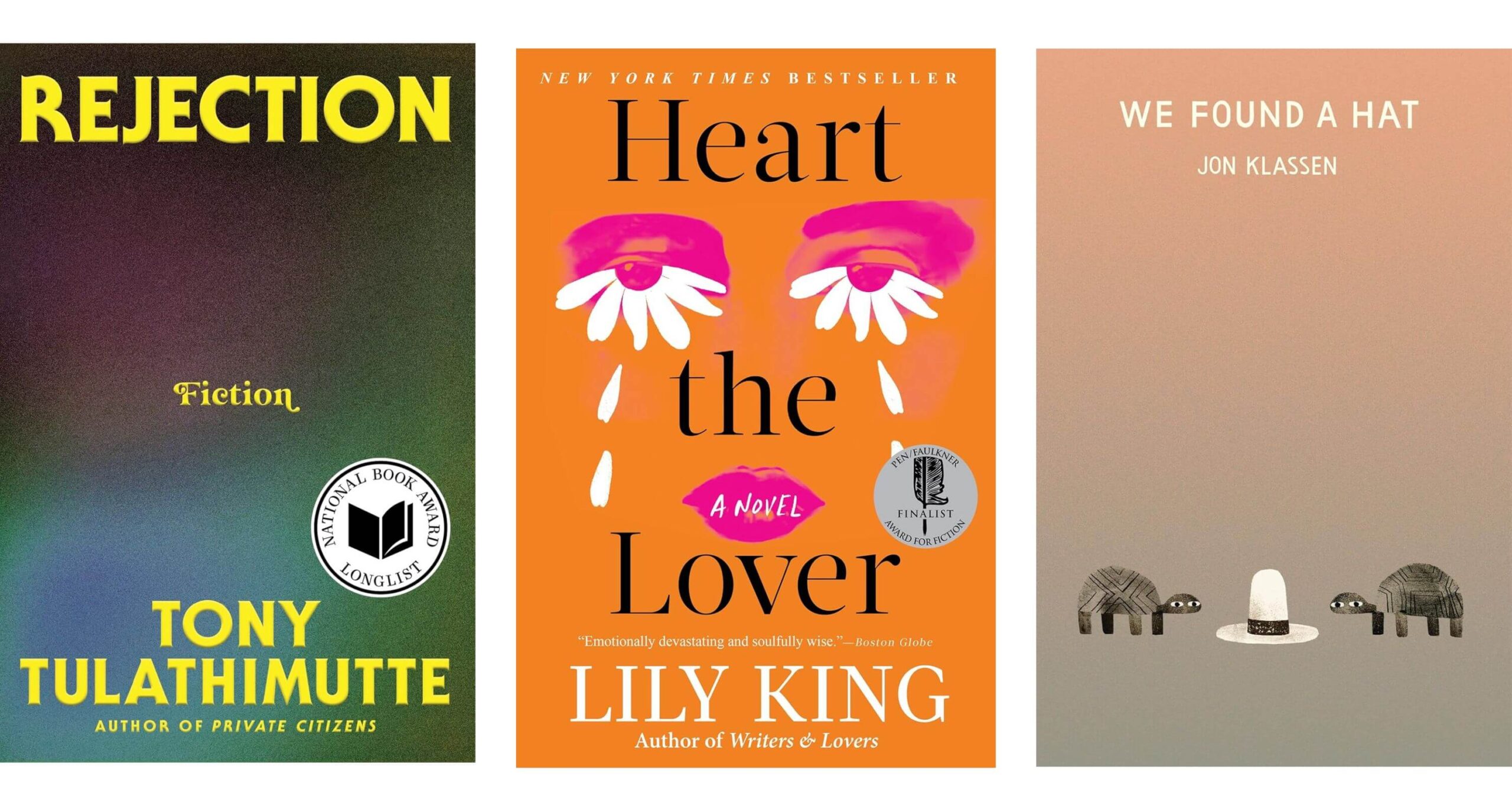
Mary H.K. Choi: It depends on the reader, but I love Rejection by Tony Tulathimutte—it’s hilarious. I also recommend Heart the Lover by Lily King. And I often gift We Found a Hat by Jon Klassen—it’s simple, but incredibly meaningful.
She Reads: Are you working on anything new?
Mary H.K. Choi: Yes—two projects. One is what I jokingly call a “fun romance,” though it definitely has heavier themes. The other is nonfiction about my experience being diagnosed as autistic as an adult. That diagnosis reframed so much of how I understand myself and my work, and I’m really interested in exploring that.
She Reads: Thank you so much for your time—we’re excited to share Pool House with readers this summer.
Mary H.K. Choi: Thank you—this was such a joy.

Leave A Comment