
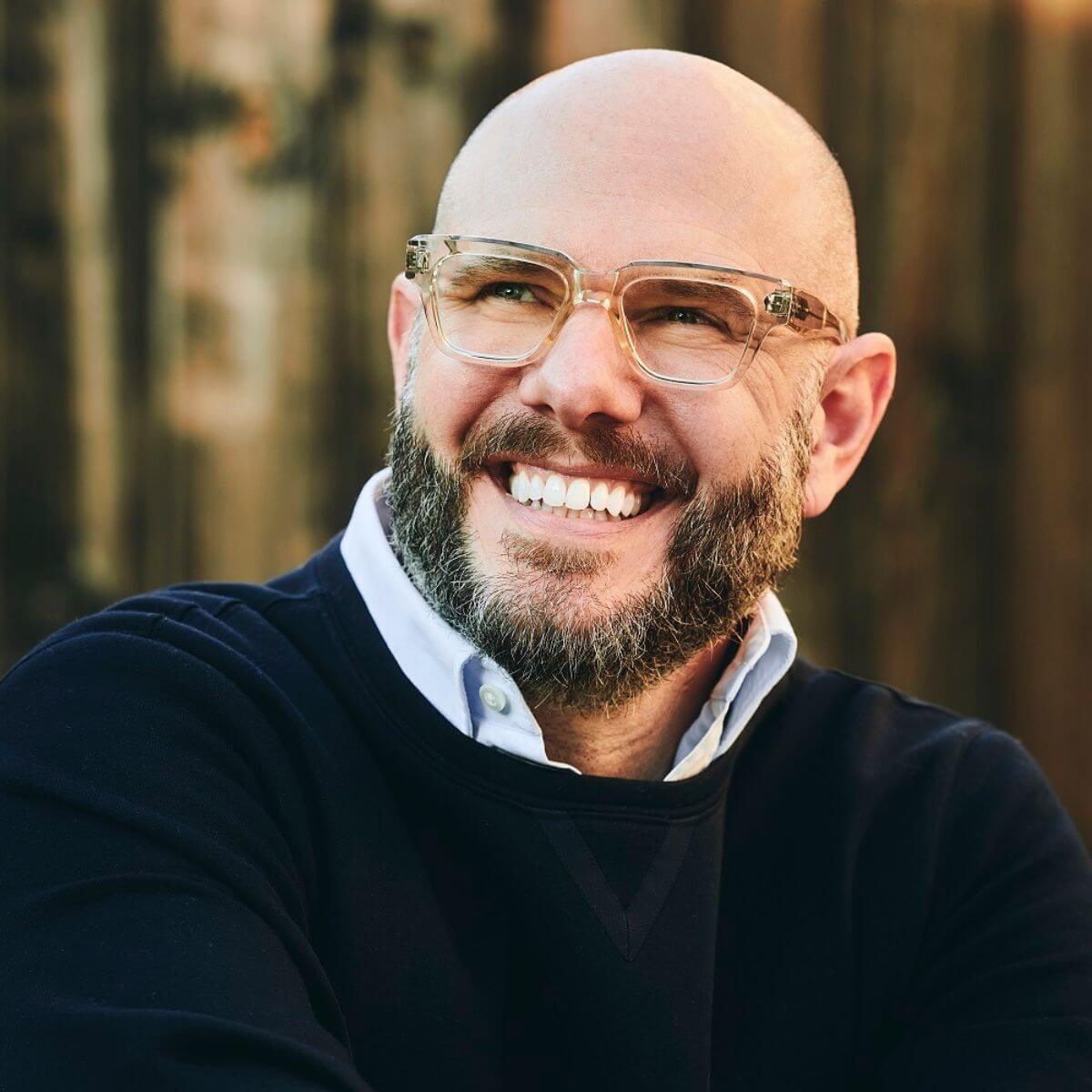
Steven Rowley has been a summer reading favorite for some time with beloved stories like The Guncle and The Celebrants. In 2026 we’re welcoming his newest novel, Take Me With You, out May 19. With an unusual inciting incident, Rowley explores love and identity with his signature sense of humor. We got the chance to talk to him about what inspired the seemingly supernatural start to his book, the adaptation of The Guncle and his favorite reads.
She Reads: First, tell us about Take Me With You. What sparked this idea? It feels a little different from your previous work.
Steven Rowley: It is a little different, but I’m excited about it. It stems from an ongoing… let’s say disagreement… that my husband and I have. If a UFO showed up over your backyard and a beam of light came down—and you had no time to say goodbye, no time to pack—would you go?
My husband, Byron, is firmly in the “yes” camp. No hesitation—he’s gone. And I’m left thinking, “Wait a minute. Am I not enough? Are the dogs not enough?” I’ve always been firmly in the “no” camp.

Buy the book now: Bookshop.org | Amazon
What I love about the question is that both answers are morally defensible. As a writer, I think exploration is part of why we’re here—but what does that mean? For some, the lure of the unknown, of a more advanced species, would be irresistible. For me, exploring the human condition—staying, committing to relationships—feels just as meaningful. You could spend a lifetime with someone and never fully know them. There’s so much to explore right here.
She Reads: The initial event implies a science fiction story, but this is more literary, right? It’s about being left behind, not exploring the stars.
Steven Rowley: Exactly. I wouldn’t classify it as science fiction—I wouldn’t want to insult sci-fi writers. The world-building they do is incredible.
This is a grounded story about someone left behind. I started imagining what life would look like if this actually happened. How long before people start asking, Where’s Byron? And I can’t explain it. Who would believe me?
She Reads: It creates a very different dynamic than someone just disappearing.
Steven Rowley: Exactly. It’s grief, but with uncertainty. Will he come back? I don’t know. How do you move forward when you don’t have answers? It became a metaphor for loss—divorce, breakup, even death—and I built the story from there.
She Reads: Because it’s not a traditional “he left and never came back” story, what did that allow you to explore?
Steven Rowley: I think it’s really about having to live with uncertainty. After a death or a divorce, once the paperwork is signed, there’s a kind of finality to it. As difficult and painful as those things are, there comes a point where you can say, okay, my job now is to pick up the pieces and move on.
But when something like this happens the character starts to doubt what he saw. Did he really see what he thinks he saw? Is what he thinks is happening actually what’s happening? You start to mentally unravel a little bit, and you have to learn to make peace with not knowing. To accept, I don’t know what’s happening, and that’s okay. It’s not necessary to explain every little mystery that life presents.
So it becomes about exploring not just grief and loss, but also your own sanity—what you believe you saw, what you trust in your own perception.
She Reads: You’ve written about loss before, but this time you’re exploring marriage and romantic love. How did that shift your approach?
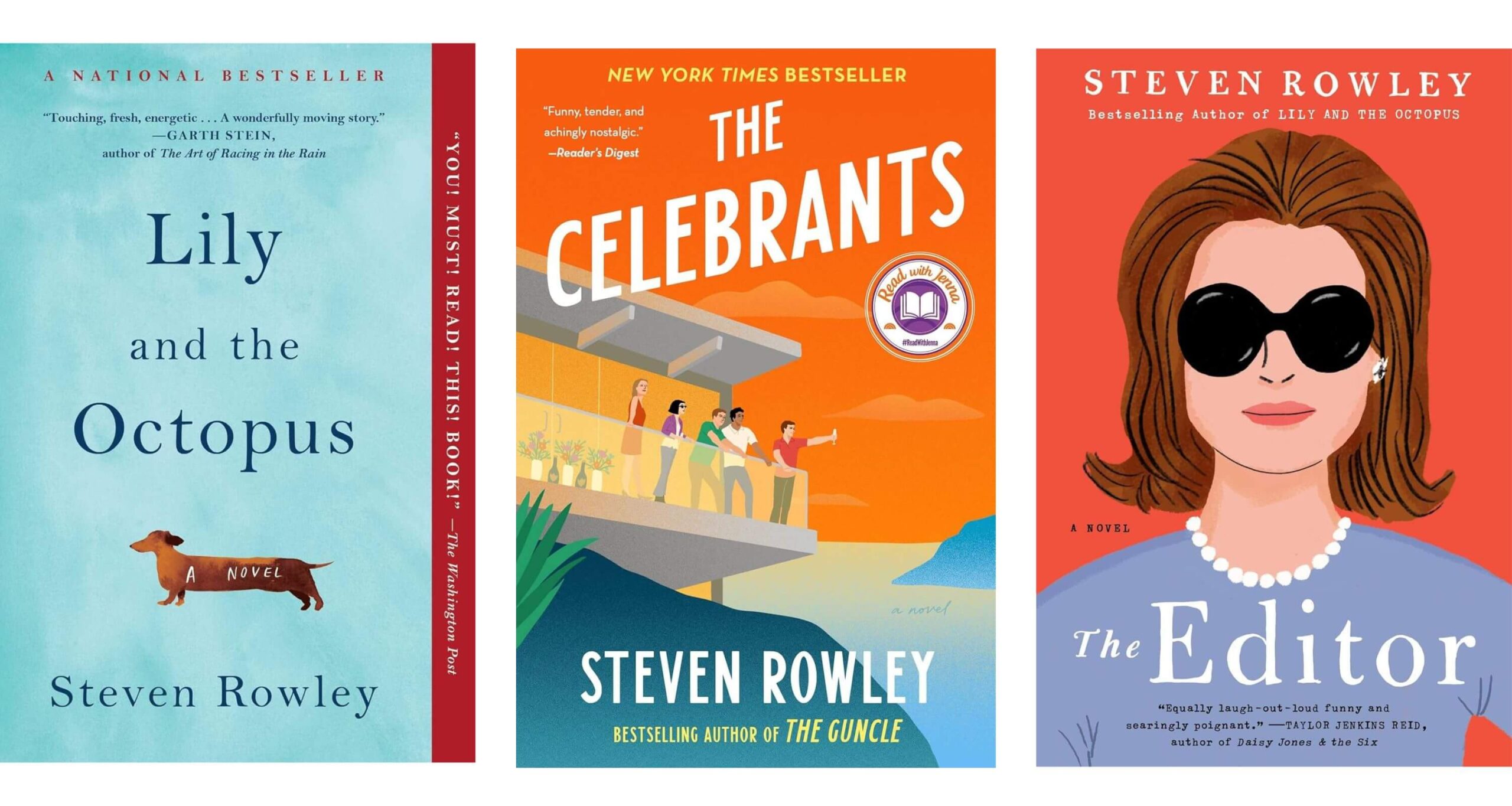
Steven Rowley: I’ve written a lot about loss in different contexts. My first novel, Lily and the Octopus, was about a man losing a dog and the kind of grief we have for our animals. The Celebrants was about friendship grief, and The Editor explored a struggling mother-son relationship.
So writing about marriage this time—and romantic love, for the first time—was both really fun and challenging. It made me question some of my own thoughts about the institution itself and long-term partnership, and how difficult it can be to grow in parallel with another person. And who are you if you’re on your own for the first time after so many years of being half of one whole?
She Reads: The relationship spans 30 years. How did you approach writing that kind of shared history?
Steven Rowley: Yeah, and to do it from a queer perspective, too because marriage equality wasn’t something I ever thought I would see in my lifetime. As a young person coming out in the early ’90s, it just felt so far away. We forget how quickly the culture changed, but at the time, it didn’t seem like a real possibility.
So exploring marriage from that context—I didn’t grow up dreaming of being married. It just didn’t feel like something that was going to be available to me. So how are my feelings about the institution different from someone who always assumed that would be their path?
The other interesting piece, writing these two gay men in their 50s, is that I didn’t always know I would live to see this age. That was the reality in the late ’80s and early ’90s—the life expectancy for gay men wasn’t guaranteed. So the idea of being with someone for 30 years wasn’t something a lot of young queer people were thinking about, because so many tragically didn’t get to experience that kind of long-term partnership.
So it was interesting to explore that in the context of something that still feels relatively new for many gay men my age—this idea of breaking ground, of being among the first to experience marriage and these very long-term relationships.
She Reads: It’s such an interesting reversal—starting with decades of love and then introducing loss. And more mature characters seem to be in fashion right now.
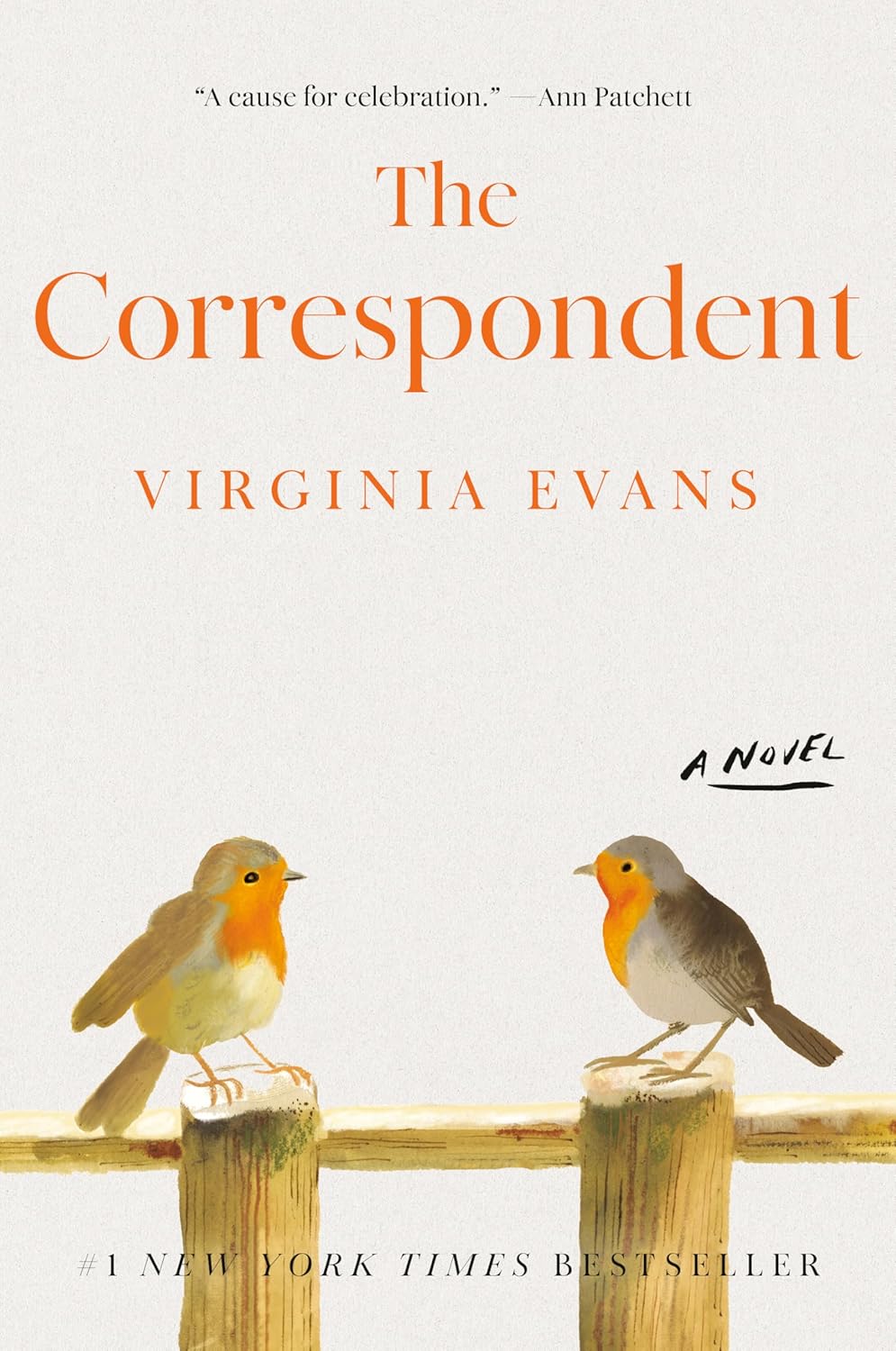
Steven Rowley: That’s one of the things I love about publishing as an industry, it really values both creative people and stories about characters who aren’t necessarily in their twenties or even their thirties anymore. You look at some of the big hits from the past year, like The Correspondent, which centers on a woman in her seventies, and how successful that’s been.
I think readers really value life experience—these rich stories about people who have lived and laughed and loved and suffered and lost. There’s just so much that happens as we grow.
She Reads: Do you see this as a love story? A breakup story? Something else?
Steven Rowley: I see it as a love story. I absolutely see it as a love story. I’ve been saying this is my first romance, though it’s not a traditional romance. But I do think one of the things the book addresses is how we can grow to take each other a little bit for granted, and the real joy that comes from rekindling something that was already there.
So in that respect, I do think of it very much a love story and a romance. Relationships over decades ebb and flow, but if two people are willing to claw their way back to appreciating each other again, I think that’s a worthwhile endeavor.
She Reads: Does Jesse also fall back in love with himself?
Steven Rowley: Yeah, 100%. Especially since Jesse is the slightly younger character. He entered the relationship when he was young and liked having a mentor—someone older, more established, someone who could show him the ropes. But sometimes what you fall for in a person, you begin to resent over time.
He’s spent much of his life trying to step into his own, no longer needing that mentor role, but really wanting to step into his own light (ironically), as Norman is the one who steps into the literal light.
So yeah, it’s very much about learning to find yourself within one of these long-term partnerships.
She Reads: Without spoilers—did you always know what happened to Norman?
Steven Rowley: It definitely developed as the book went on. I usually have a good idea, but I’m not an outliner. When I sit down to start, it’s usually with a strong question, because I think at the heart of every good novel there’s some kind of moral question.
Then I might have an idea for the opening scene and maybe where I think it’s going to end up. I always equate it to a road trip. I know my destination city, but I don’t know what route I’m going to take to get there. And that doesn’t mean I won’t end up somewhere slightly different than I expected, but it’s usually in the same state, in the general vicinity.
So I had an idea, but I didn’t know the true emotional landing for the characters until I lived the journey with them.
She Reads: Your work balances humor and heartbreak so well. What role did humor play here?
Steven Rowley: I write funny books about grief… I don’t know exactly how that happened. But this still fits in that tradition. There’s definitely humor here, even just in the absurdity of the premise. You and I can laugh just talking about it, but the book itself is funny, too. It’s not quite the joke-a-minute pace of something like the Guncle books, but there’s always humor in my work.
For me, humor has always been a coping mechanism. I don’t know how a character could navigate true loss if they also lost their sense of humor. And that’s not to say the humor isn’t sometimes dark, there’s gallows humor, self-deprecating humor.
But I do think, and you can expand this to the world at large, that in dark times humor is essential. Even in serious stories, humor isn’t the opposite of seriousness. It’s just a way of reframing something difficult so we can process it, digest it, and understand it.
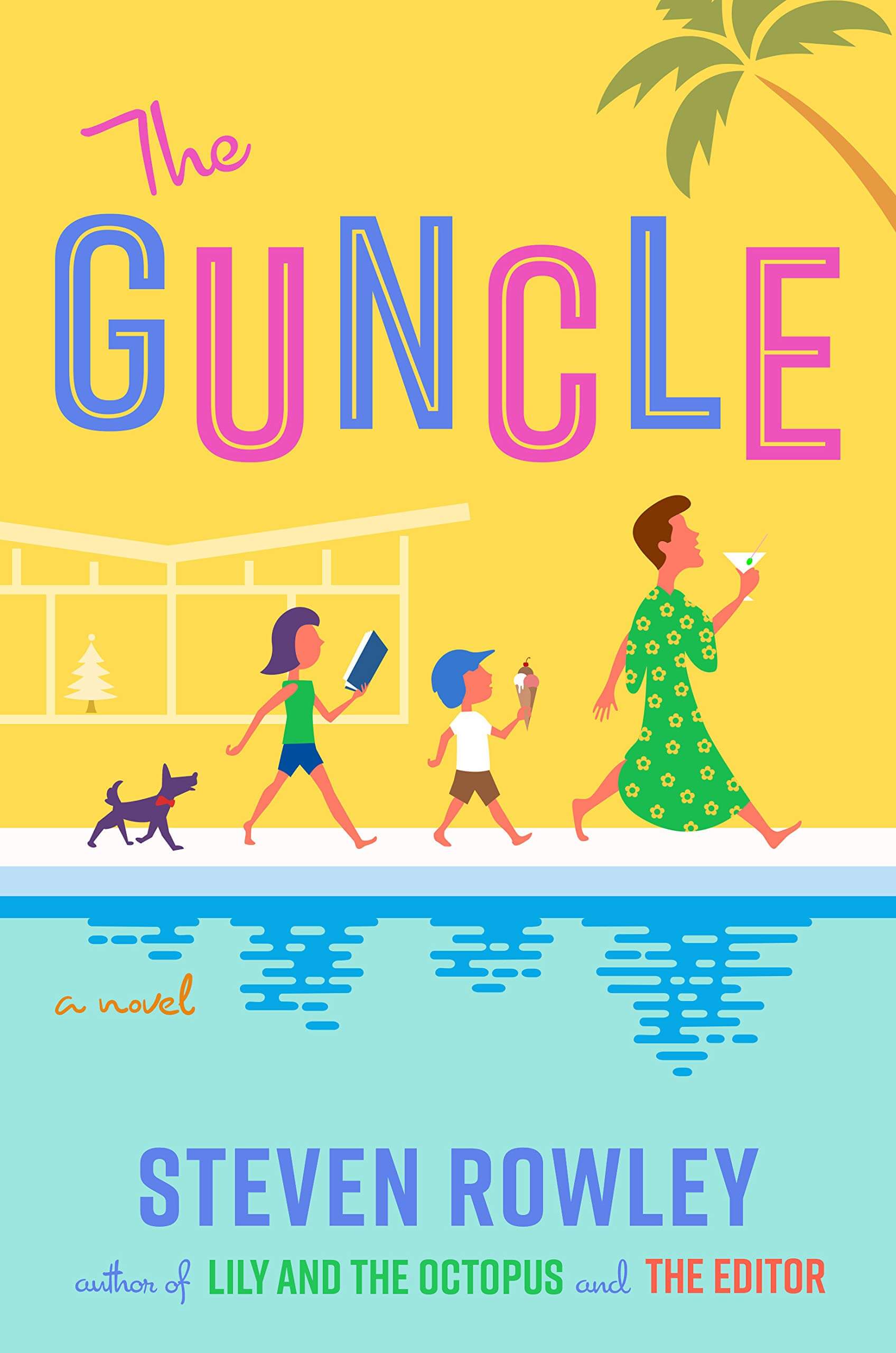
She Reads: Let’s talk adaptation—The Guncle is in development. Where are things now?
Steven Rowley: Yeah, Jason Moore is attached to direct, he is fantastic. He directed the first Pitch Perfect, among others, and has worked with Tina Fey and Amy Poehler. He has such a great comedic sensibility. So I’m thrilled he’s been such a strong partner on this. I’m hoping to have real news to share soon.
I will say, though, it can still be difficult to get queer stories made. And the idea of a mainstream studio family film with a queer lead still feels quietly radical. There are plenty of gay characters in film and TV, but seeing them as caregivers, or at the center of a true family story, is rarer than it should be—especially when there are so many beautiful families of all kinds.
That said, I will say thank you to Heated Rivalry. There’s no hockey smut in The Guncle, but it really showed there’s an appetite for thoughtful adaptations and that queer stories aren’t a barrier to finding an audience. I think that success is helping reenergize the studio’s engagement with this project, and I’m hopeful I’ll have news on casting or a start date soon.
She Reads: Any dream casting?
Steven Rowley: Honestly? Whoever gets cast was always my first choice. But there’s so much talent out there—Jonathan Bailey, Dan Levy, Sean Hayes, Neil Patrick Harris, Jonathan Groff… I’m excited to see who it is.
She Reads: Let’s shift to summer vibes—favorite reading or writing spot?
Steven Rowley: In my swimming pool. I live in Palm Springs, so it’s necessary. I stand in the pool, rest the book on the edge under an umbrella, and read until I need a refill.
She Reads: What places inspire your writing?
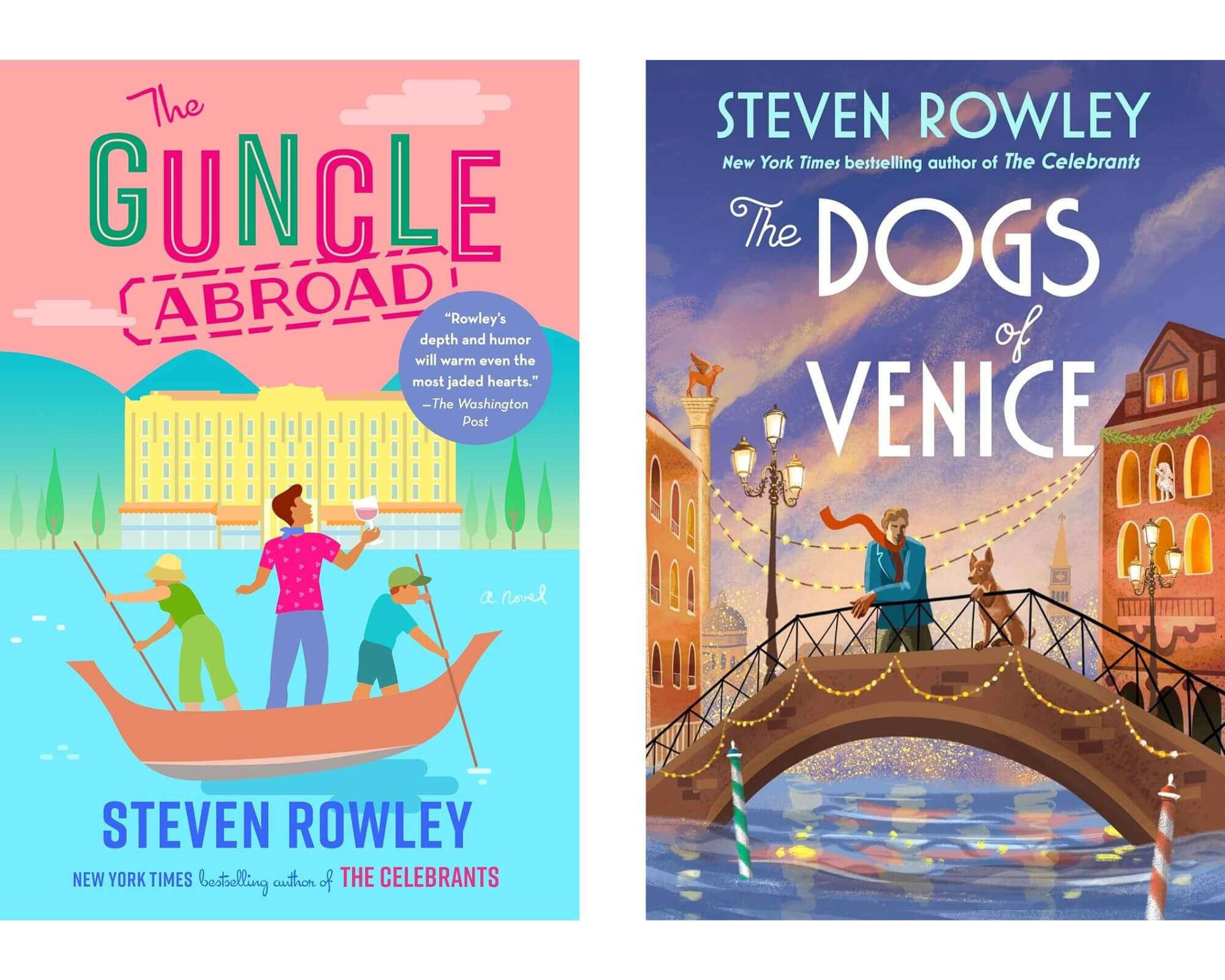
Steven Rowley: Italy. After writing The Guncle Abroad and The Dogs of Venice, I’ve spent a lot of time there. You can’t replicate the sensory details—the air, the smells, the sounds—without experiencing them.
She Reads: What are you currently reading?
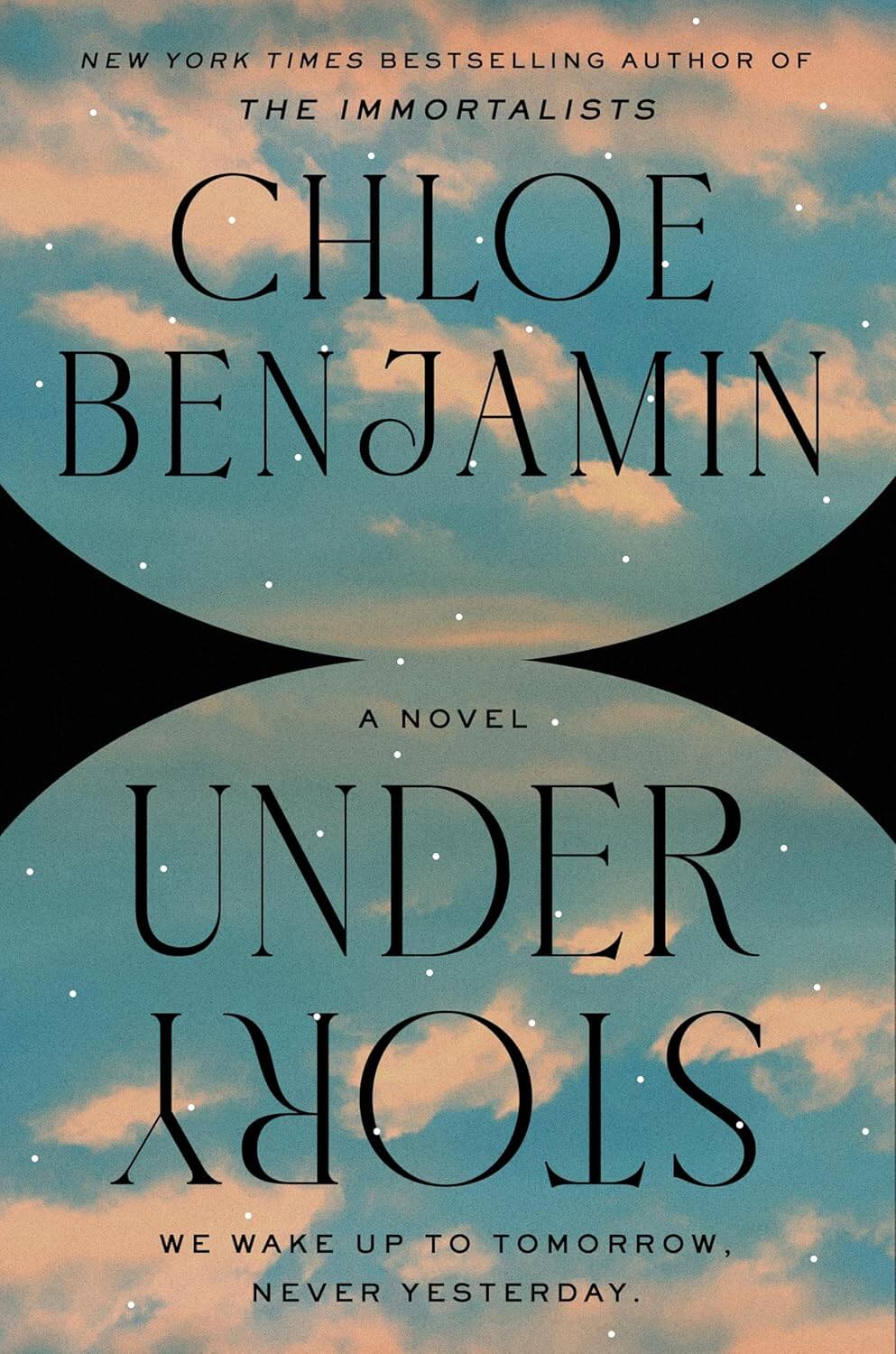
Steven Rowley: Under Story by Chloe Benjamin—it comes out in September. It’s going to be one of the books of the year.
She Reads: And books you always recommend?
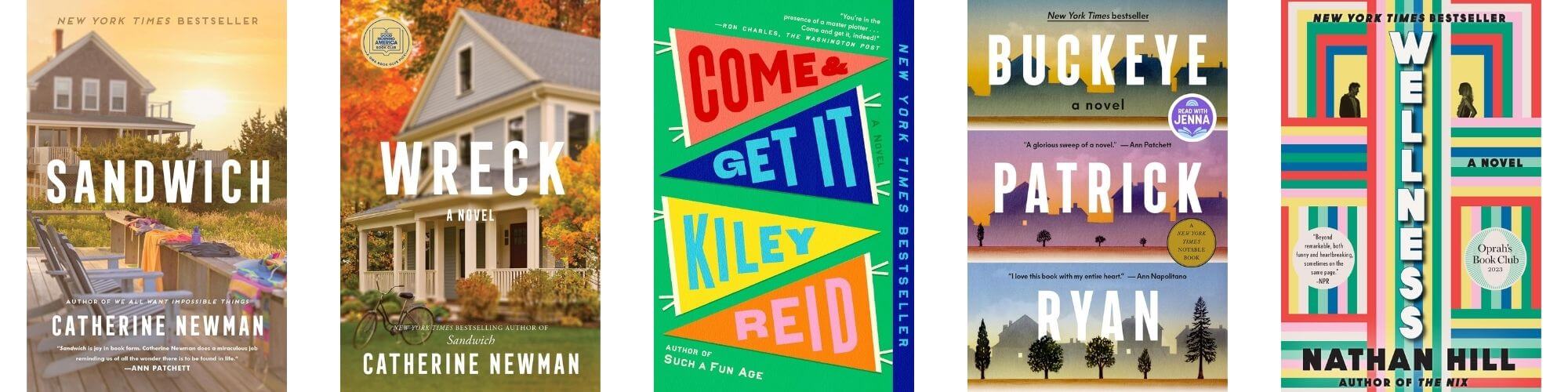
Steven Rowley: Catherine Newman’s Sandwich and Wreck, Kylie Reid’s Come & Get It, and big, multi-generational family stories like Buckeye by Patrick Ryan and Wellness by Nathan Hill.
She Reads: What’s next for you?
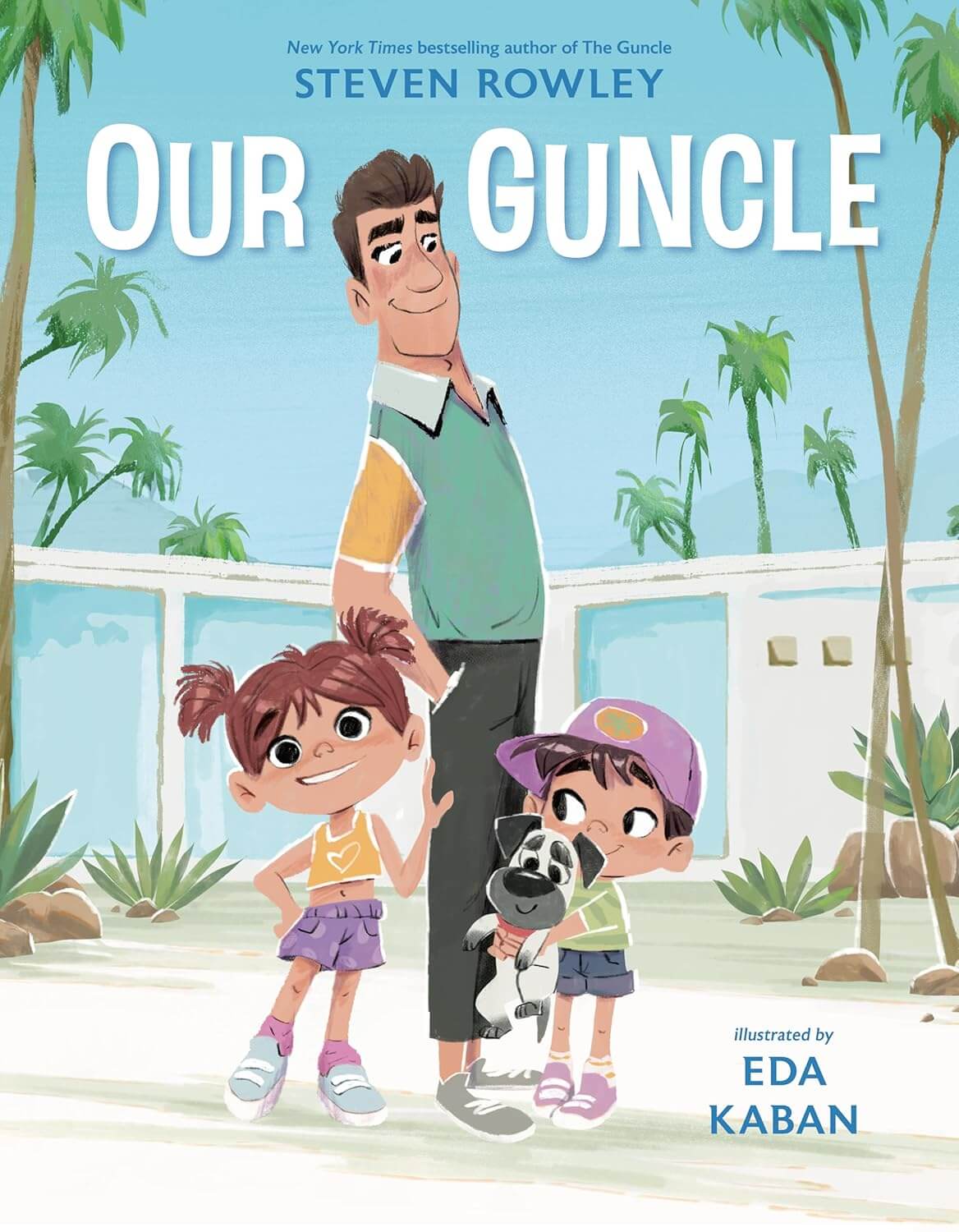
Steven Rowley: My first children’s book, Our Guncle, comes out in May. It’s told from the kids’ perspective, with illustrations by Edith Caban.
And Take Me With You is out May 19—so I guess I should start writing something new.




Leave A Comment